
Last updated November 22, 2026
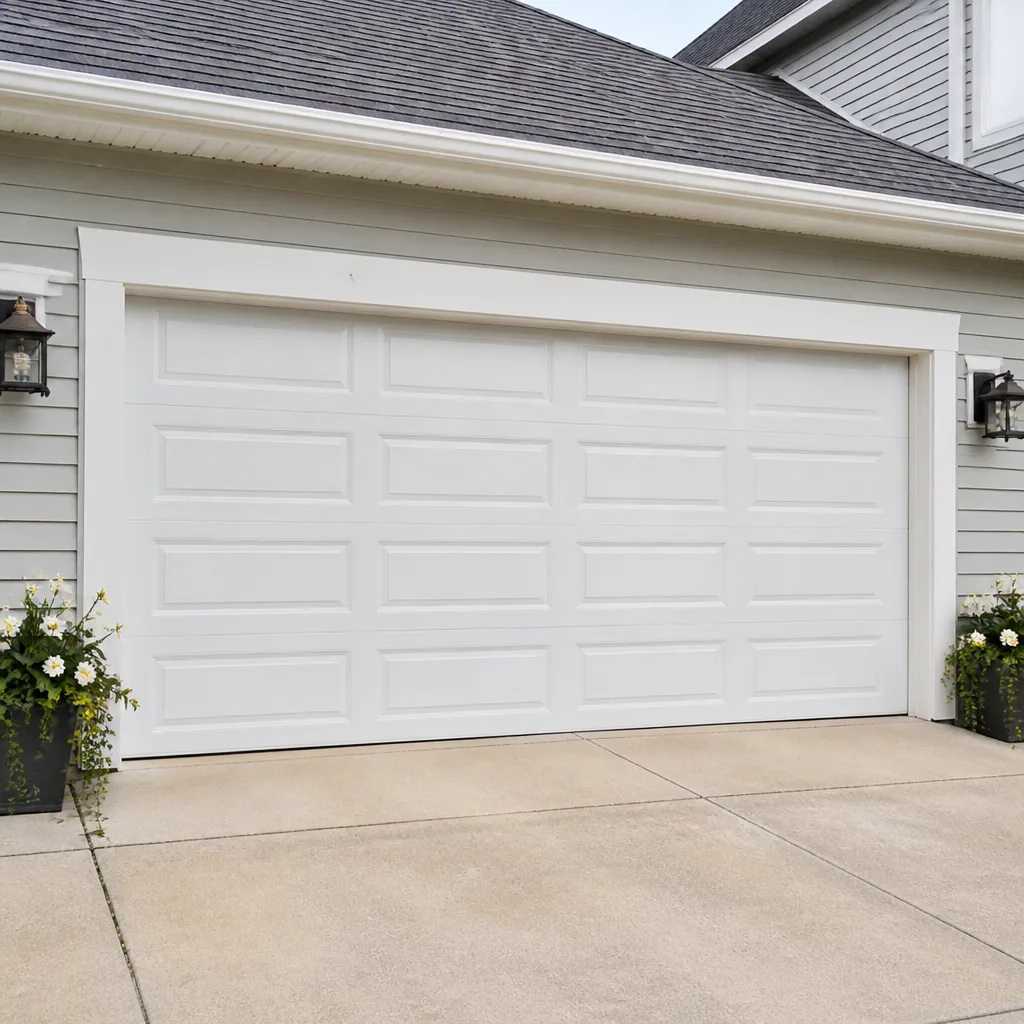 Raised-panel steel
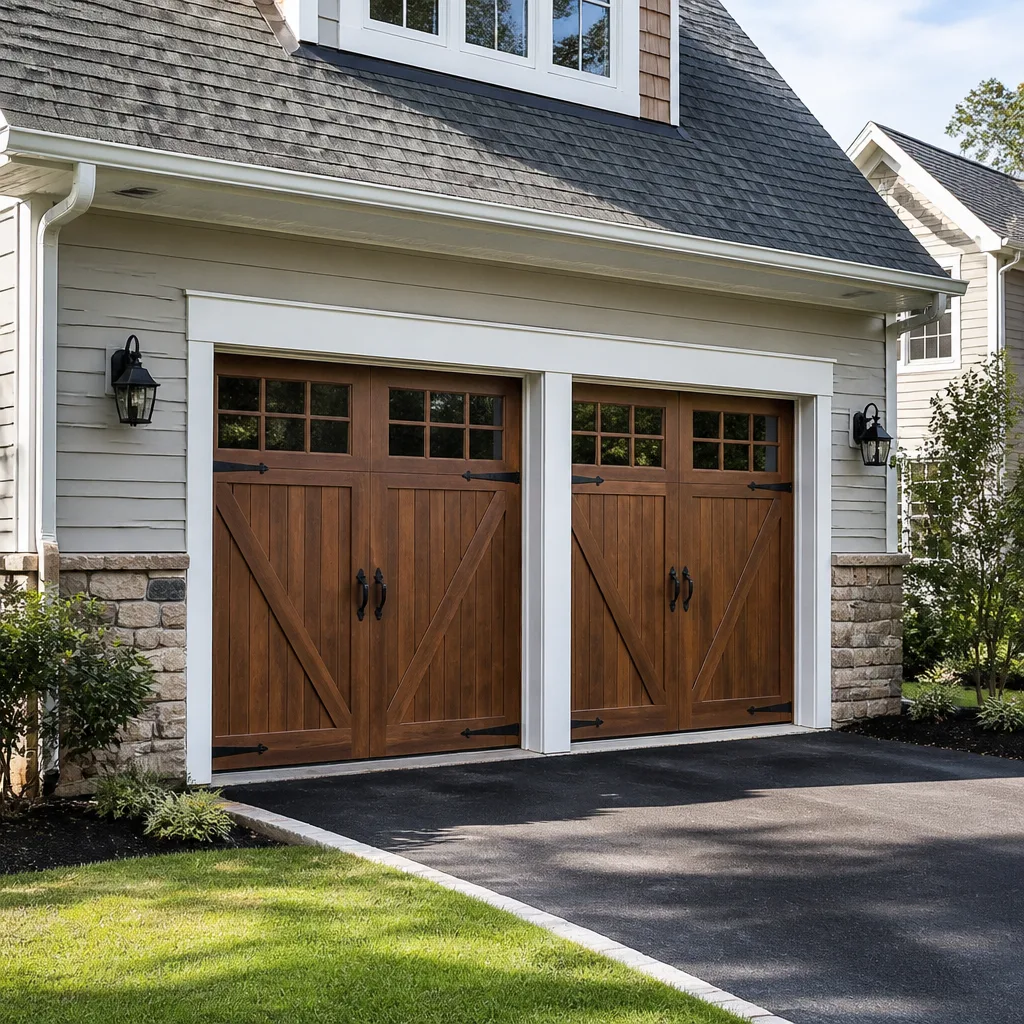 Carriage house
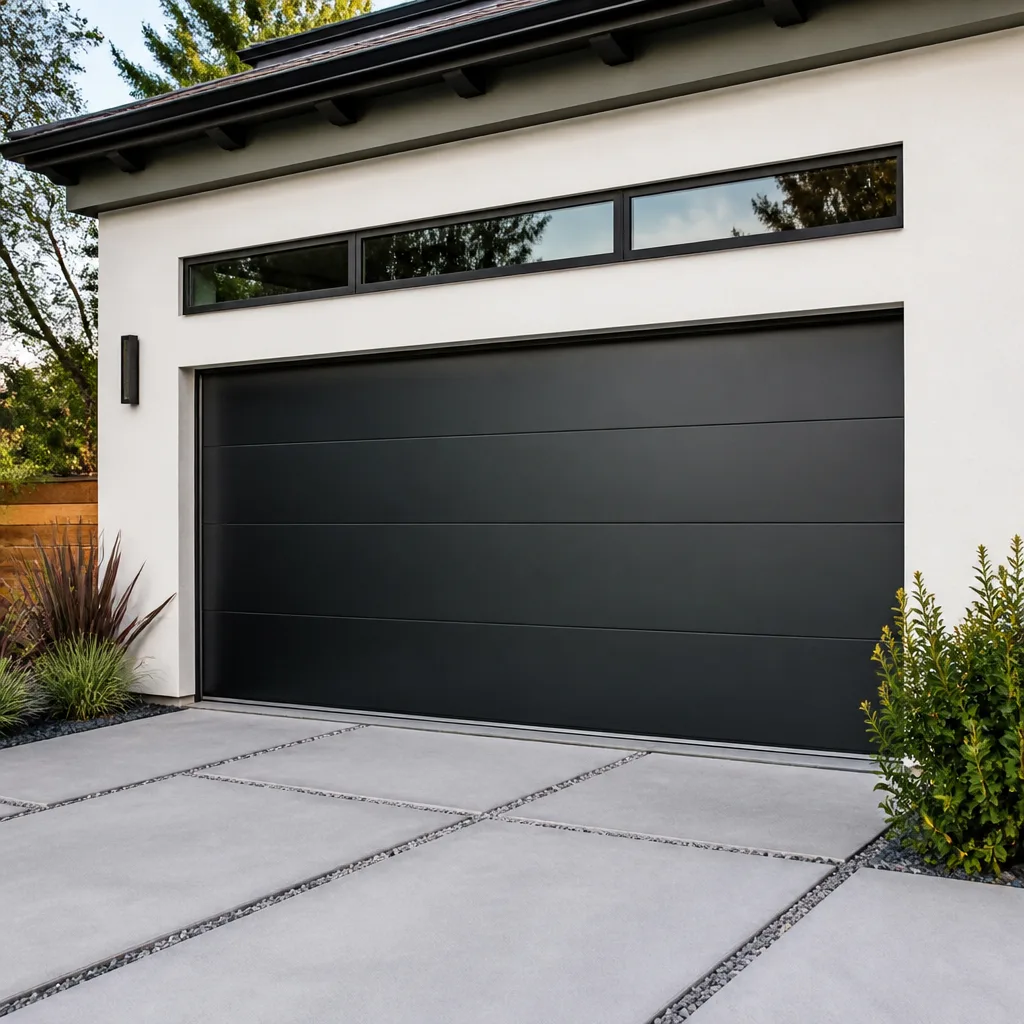 Modern flush
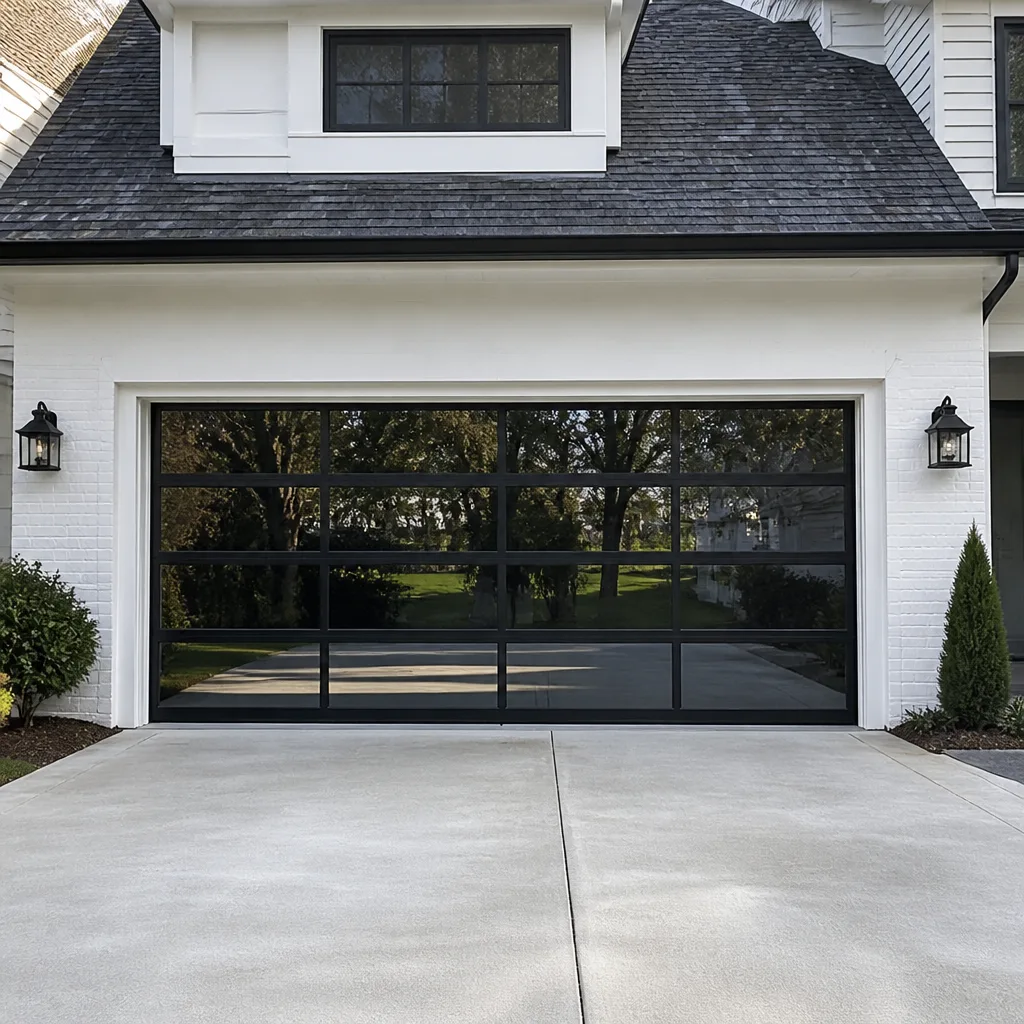 Full-view glass
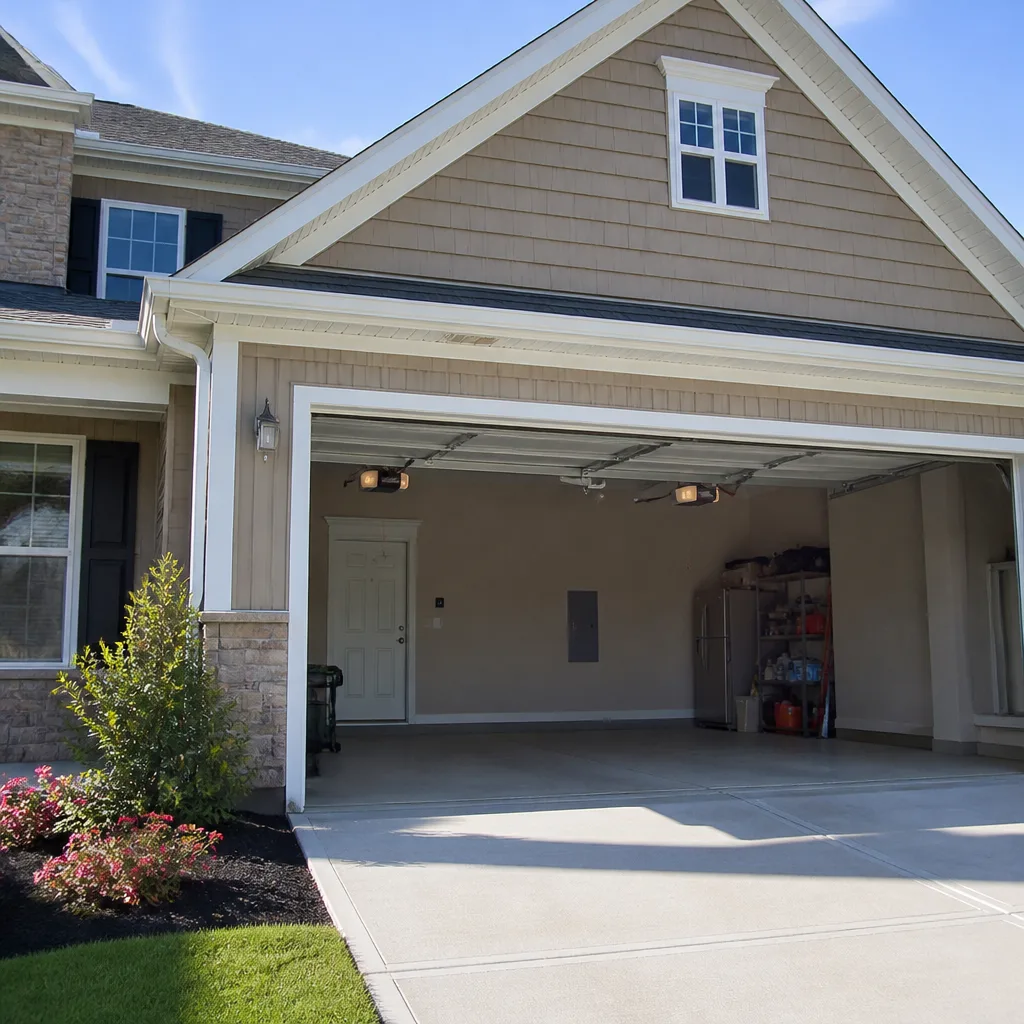 LiftMaster openers
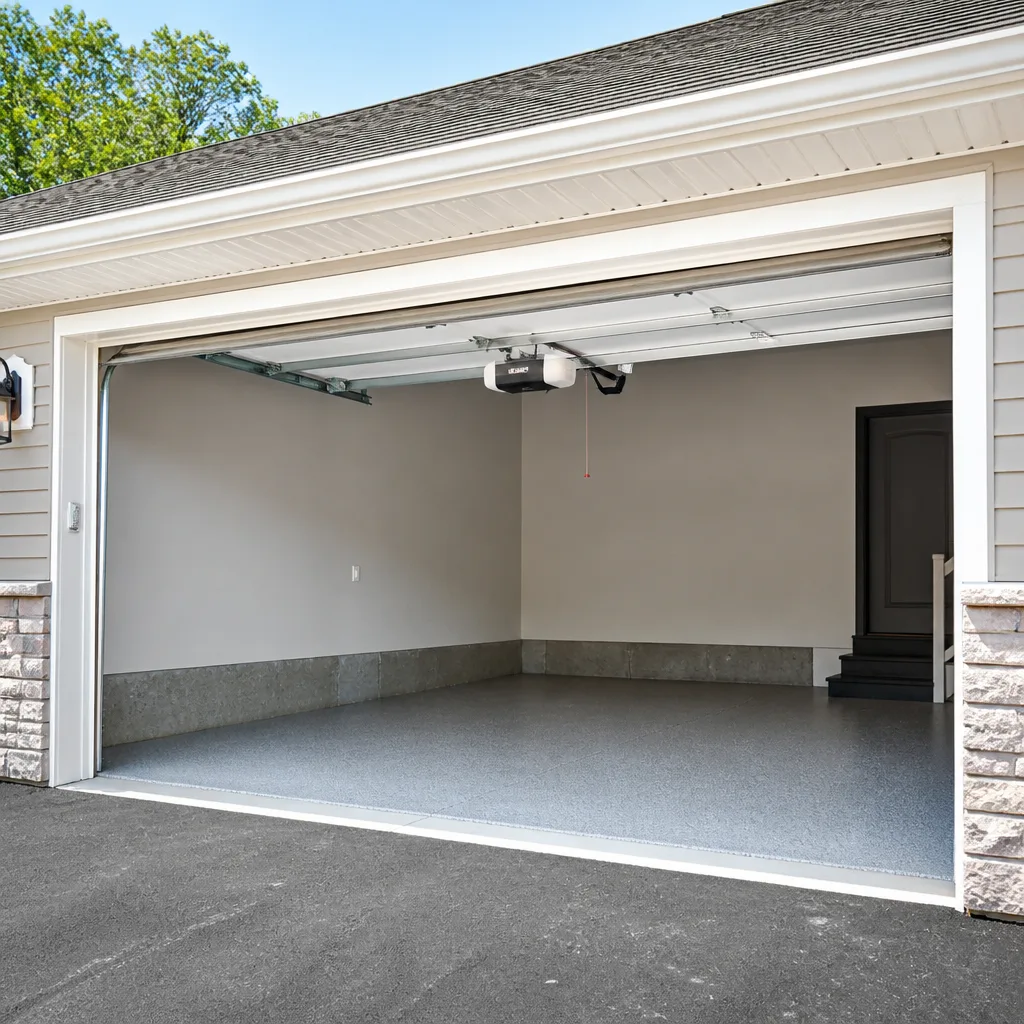 Chamberlain openers
Full 25-point door and opener safety check with every visit - springs, cables, rollers, tracks, and your LiftMaster or Chamberlain opener included
You get a price before we start. It does not change when the pro arrives.
Get your free estimateDIY vs Professional Garage Door: The Titusville Homeowner’s Decision Guide
Torsion springs carry a torque load measured in hundreds of pounds. That’s not a warning designed to scare you off a project – it’s a physics fact, and it’s the single fact that decides whether a task belongs on your project list or on a service call. Most garage door advice swings to one extreme or the other: “fix it all yourself” or “never touch it.” Neither helps a homeowner standing in the driveway wondering what’s actually safe. This guide draws the line for real, task by task, so you know what you can handle in an afternoon in Titusville and what needs a trained technician.
Quick Answer
Lubrication, sensor alignment, remote reprogramming, weatherstrip replacement, and visual inspections are safe for most homeowners to do themselves. Torsion spring replacement, cable work, track realignment, and any opener wiring beyond swapping a button or battery should be left to a trained professional – the injury risk and the wind-load code requirements in Florida make the savings disappear fast. Everything in between depends on your tools, your comfort level, and how the job fails.
Styles & brands we work with
- Raised-panel steel
- Carriage house
- Modern flush
- Full-view glass
- LiftMaster openers
- Chamberlain openers
Table of Contents
- The definitive DIY-safe list
- The definitive do-not-DIY list
- Florida wind-load compliance and the permit question
- How to calculate your true DIY cost
- What partial DIY looks like
- How a professional garage door repair visit actually works
- Common mistakes to avoid
- When to call a professional
The Definitive DIY-Safe List: What Titusville Homeowners Can Handle
These are the garage door tasks that come down to attention and patience rather than muscle and specialized knowledge. Any reasonably handy homeowner in Titusville can manage them with a step stool and a few basic tools, and none of them involve a component stored under load.
- Lubrication. Hinges, rollers, and the track itself need a garage-door-specific lubricant once or twice a year. In Titusville’s mild winters the schedule is less about cold and more about our humid summers, which work dust into moving parts faster than a dry climate would.
- Sensor alignment. The two small photo-eye sensors near the floor need to face each other and see a clear line. If your door reverses the moment it nears the ground, this is usually the culprit. Wipe the lenses, check for a bent bracket, and make sure nothing is sitting in the beam.
- Remote and keypad reprogramming. A Craftsman or Chamberlain remote that stops working after a power flicker usually just needs to be re-paired. Your opener’s manual walks you through the pairing button sequence, and it takes a couple of minutes.
- Weatherstrip replacement. The rubber seal along the bottom of the door and the strips around the frame keep driving rain and insects out. Sliding a new seal into the aluminum retainer is a homeowner job. It’s also one of the highest-value small repairs for a Titusville garage, since summer storms push water sideways under a worn seal.
- Visual inspection and tightening. Look at the springs, cables, hinges, and track. Listen for new noises. Tighten the bolts on the hinges and brackets you can reach safely while the door is fully closed and the opener is unplugged.
Notice what’s missing from that list: anything that requires you to deal with tension. That’s the dividing line. If the repair asks you to adjust, release, or replace a component that’s holding stored energy, it moves to the next section.
The Definitive Do-Not-DIY List: Where DIY Becomes a Bad Trade
These tasks carry a real risk of serious injury or of making the failure worse. We’ve seen plenty of half-finished spring jobs, and the second visit always costs more than the first one would have. If your door has a problem on this list, a garage door spring repair visit from a trained technician is the right move, not a trip to the hardware store.
- Torsion spring replacement. The torsion spring above the door holds the full weight of the panel stack. Replacing it means controlling that tension with winding bars in a very specific sequence. Get the wind count wrong and the spring can fail violently.
- Extension spring work. The older side-mounted springs are somewhat less demanding than torsion, but they’re still under tension, and the cables that run with them can snap. Both torsion and extension work belong to someone who does it routinely and wears the right safety gear.
- Cable replacement or adjustment. The cables are the safety system that keeps the door from dropping if a spring fails. A mis-seated cable turns the door into a falling weight.
- Track realignment. A bent track can be straightened, but the geometry has to be exact or the door binds, strains the opener, and wears the rollers. It’s not a job for a pipe wrench and a guess.
- Opener wiring beyond a button or battery swap. Anything that involves opening the opener housing, touching the low-voltage wiring, or connecting new safety sensors to the unit belongs to a trained technician. There’s also a point where the control board itself fails, and a garage door opener repair technician needs to test it with a meter rather than buy a replacement on hope.
- Any work that requires the door to be partly open while you’re under it. If you can’t keep both feet on the floor, this isn’t a homeowner task.
We’re not saying this to nudge you toward a service call on principle. Plenty of the jobs above look simple on a video and go wrong on the last quarter inch of a winding bar. The torque at the top of a garage door is genuinely different from anything else in a typical home workshop.
Florida Wind-Load Compliance and the Permit Question
This is the part most garage door guides skip, and it matters more in Titusville than in most of the country. Florida codes place garage doors on the building envelope’s wind-load line because the door opening is the largest and weakest part of a wind-facing wall. A new garage door installation isn’t just hanging panels – it’s a structural change, and the door and its anchoring have to meet the code that applies to your home.
Two things follow from that:
- Most garage door replacements need a permit. The exact rules vary by jurisdiction and by the wind zone a home sits in, so the reliable answer is to call the Titusville building department and ask them directly about your address. They’ll tell you what applies.
- A DIY install that skips the permit puts you in a bad spot later. Unpermitted work can create problems at resale, when an inspector asks for the permit history, and it can complicate a claim with your insurer if a storm-related failure traces back to a door that wasn’t compliant. That risk exists whether or not you use a professional, but a licensed and insured installer knows the process and works with the inspection instead of around it.
We can’t tell you a specific code clause or a specific performance number, because it depends on your home and the current adopted code. What we can tell you is that any door replacement in Titusville deserves the permit question asked out loud before work begins. The local pro you connect with through Garage Door Repair Titusville is licensed and insured as their state requires and will tell you honestly what the job needs. A cheap install that bypasses the permit process is not a bargain.
How to Calculate Your True DIY Cost
The real math on DIY isn’t “retail price of the part” versus “what a technician quotes.” It’s the full cost of doing it yourself, starting with the tools you’ll need to buy and the time it takes. Here’s the honest way to run the numbers for a typical Titusville job.
- Parts. A replacement spring, a pair of cables, an opener control board. The parts aren’t expensive in isolation.
- Tools. Torsion spring work needs winding bars, which you’ll probably only ever use once or twice. That’s already a sunk cost.
- Your time. A spring job with the right tools and some practice runs about an hour. A first-timer takes two to three, plus the trip to the hardware store, plus the trip you make when the first bearing plate doesn’t fit.
- Risk. This is the line item most DIY comparisons leave out. A spring injury is a serious injury, and the cost of that is real, even if you can’t put a number on it.
Professional work quotes a flat rate per job, and the quote is set by a written estimate before anything starts. So the fair comparison is your full DIY cost – parts, tools, time, and the cost of getting the job right on the second try if the first one fails – against a single flat number you know in advance. When you put it that way, spring and cable jobs usually stop looking like savings. Simple maintenance jobs usually still do.
What Partial DIY Looks Like: Reduce the Scope of the Service Call
This is the sweet spot most homeowners never hear about. You don’t have to pick a side. You can do the safe work yourself and bring in a technician only for the part that carries real risk. The key is to do your prep before you call, so the visit is focused and the estimate reflects a smaller job.
- Clear the garage floor. Technicians need room to work around the door and the opener. Pulling the car out and moving anything stacked near the track takes a few minutes and often tightens up the quote.
- Note the symptoms before you call. Which part of the cycle does the door hesitate? Does it stall on the way up, on the way down, or both? Is there a new noise, and where does it come from? A clear description helps a technician arrive prepared.
- Handle the safe repairs first. Replace the weatherstrip yourself, wipe down the sensors, and re-pair the remote. That way you’re not paying for a task you could have done in ten minutes.
- Leave the spring and cable work alone. Don’t try to save a few dollars by loosening a spring or cable before the visit. That’s how a repair turns into an emergency.
When you prepare this way, the professional visit shrinks to exactly what it should be: the high-risk repair and nothing else. The local pros we connect homeowners with have up to 12 years of experience, so they’ve seen every partial-prep version of the job.
How a Professional Garage Door Repair Visit Actually Works
Knowing what a visit looks like removes a lot of the mystery and helps you decide whether you need one. For a routine garage door repair, the process is straightforward.
- You describe the problem and get an estimate. The estimate is free, and the price is quoted and agreed before any work starts. That’s the whole point of a written estimate.
- The technician diagnoses the exact failure. This is where brand familiarity pays off. We work on the brand you already have – LiftMaster and Chamberlain and Raynor and Craftsman among them – so the technician arrives already familiar with the opener, the travel limits, and the spring setup rather than learning your system on the spot.
- The repair is confirmed before it starts. If the diagnosis turns up a second problem, you hear about it first, with a price, before the technician touches it. There are no surprise line items.
- The work is tested through a full cycle. On a spring or opener repair, that includes a safety reversal test before the technician leaves.
For a new door installation, the process is different – it’s measured, ordered, and scheduled, so there’s no same-day promise. You’ll get a free measure and a written price, and you’ll get the permit question sorted out before the work begins. That’s how the local pros we work with handle it.
Common Mistakes to Avoid
- Treating a spring like a stretched rubber band. Homeowners see the spring and think it’s just tension that can be released slowly. It’s a stored-energy component that can cause serious injury. This is the mistake that causes the most emergency calls we get in Titusville.
- Pulling the release cord on a door with a broken spring. If a spring has snapped, the door is much heavier than it should be. Pulling the cord drops that full weight, sometimes onto the person pulling.
- Installing a new door without checking the permit requirement. A DIY install that skips the permit can cause trouble at resale and with insurance. Call the Titusville building department and ask about your address first.
- Replacing the opener when the real problem is the door. A sluggish opener is often fighting a bent track or a worn spring. Replacing the opener doesn’t fix a door problem. It just moves the failure to a more expensive part.
- Ignoring a reversing door. If the door reverses on its own or fails the safety reversal test, the sensors or limit settings are wrong. It’s a safety feature, not a nuisance, and it should be fixed before anyone uses the door.
- Letting the weatherstrip go for years. In Titusville’s humid summers, a worn bottom seal lets water and insects into the garage. It’s cheap to fix and expensive to ignore.
- Trying to “help” a technician by loosening a cable first. Don’t. The technician needs the door in its failed state to diagnose it, and a loosened cable is a hazard to both of you.
See the difference
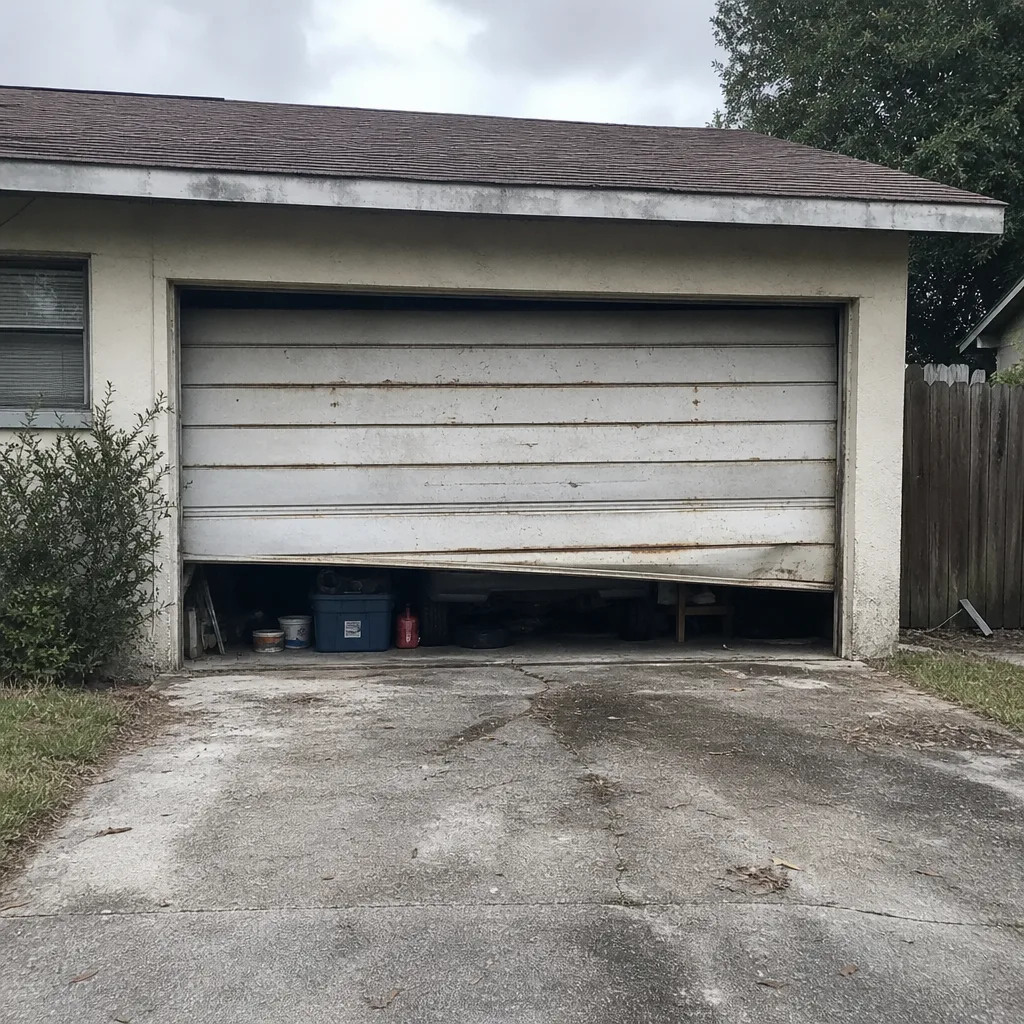 Before
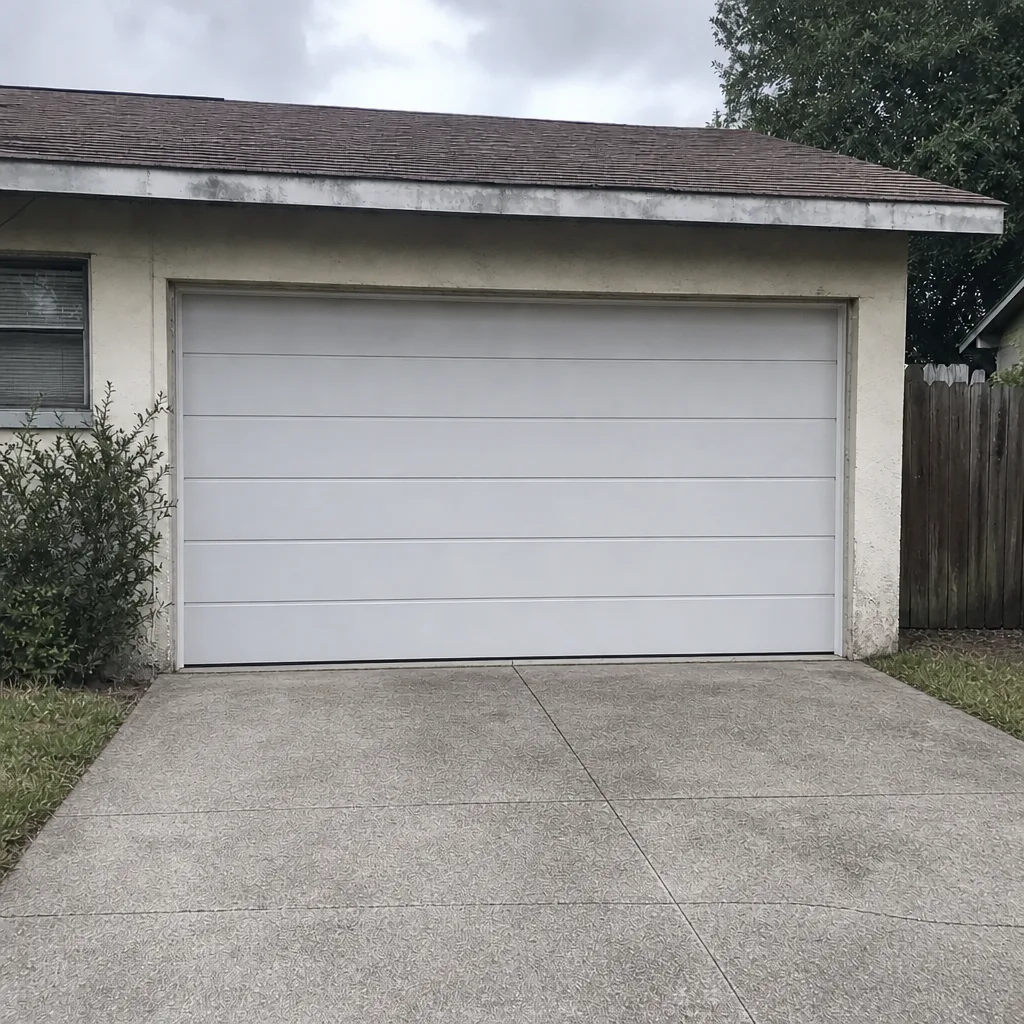 After
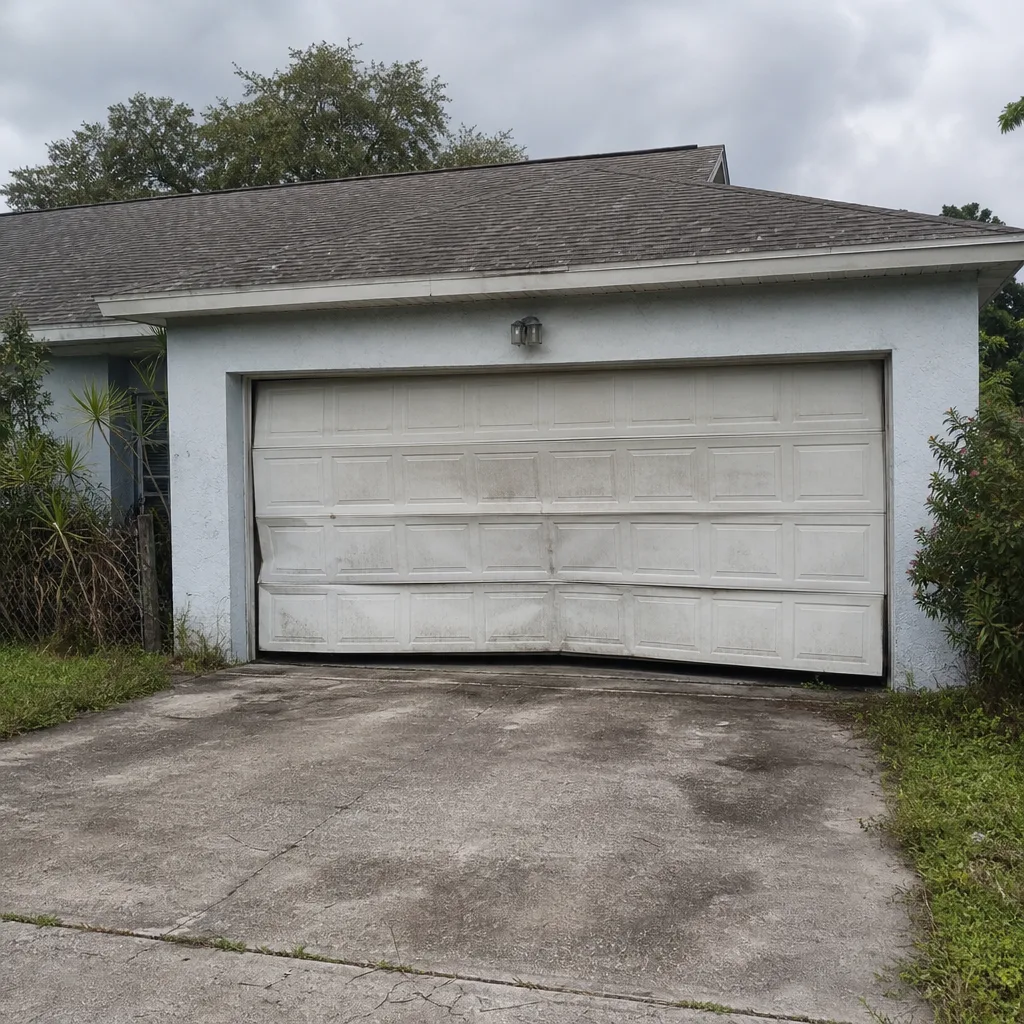 Before
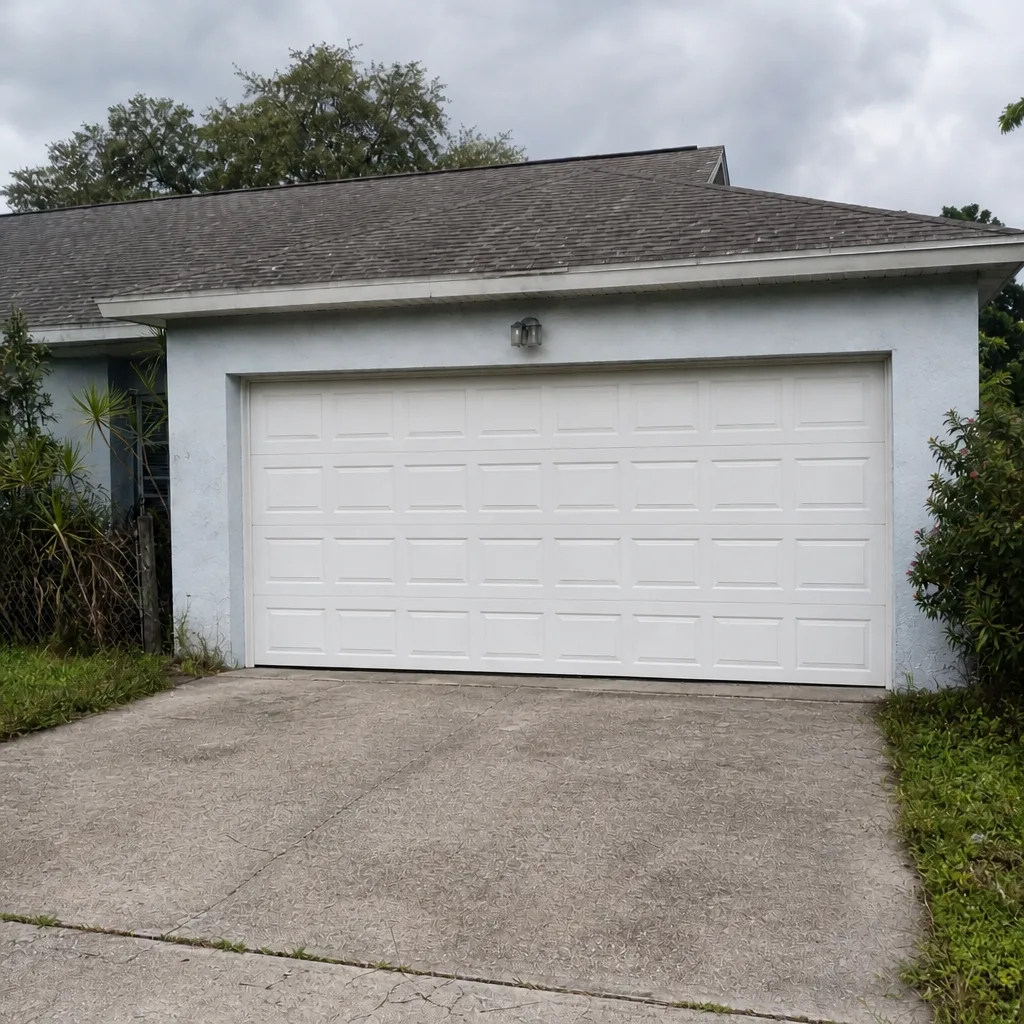 After
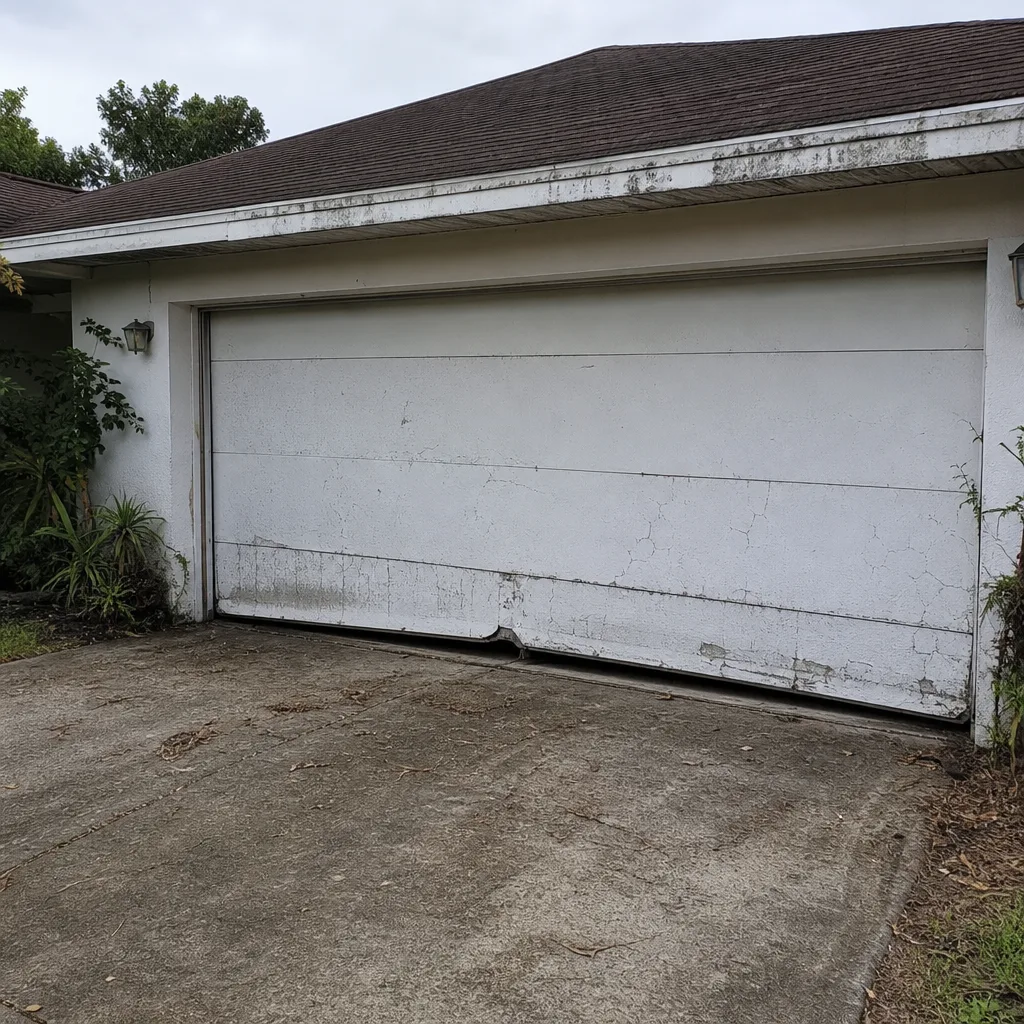 Before
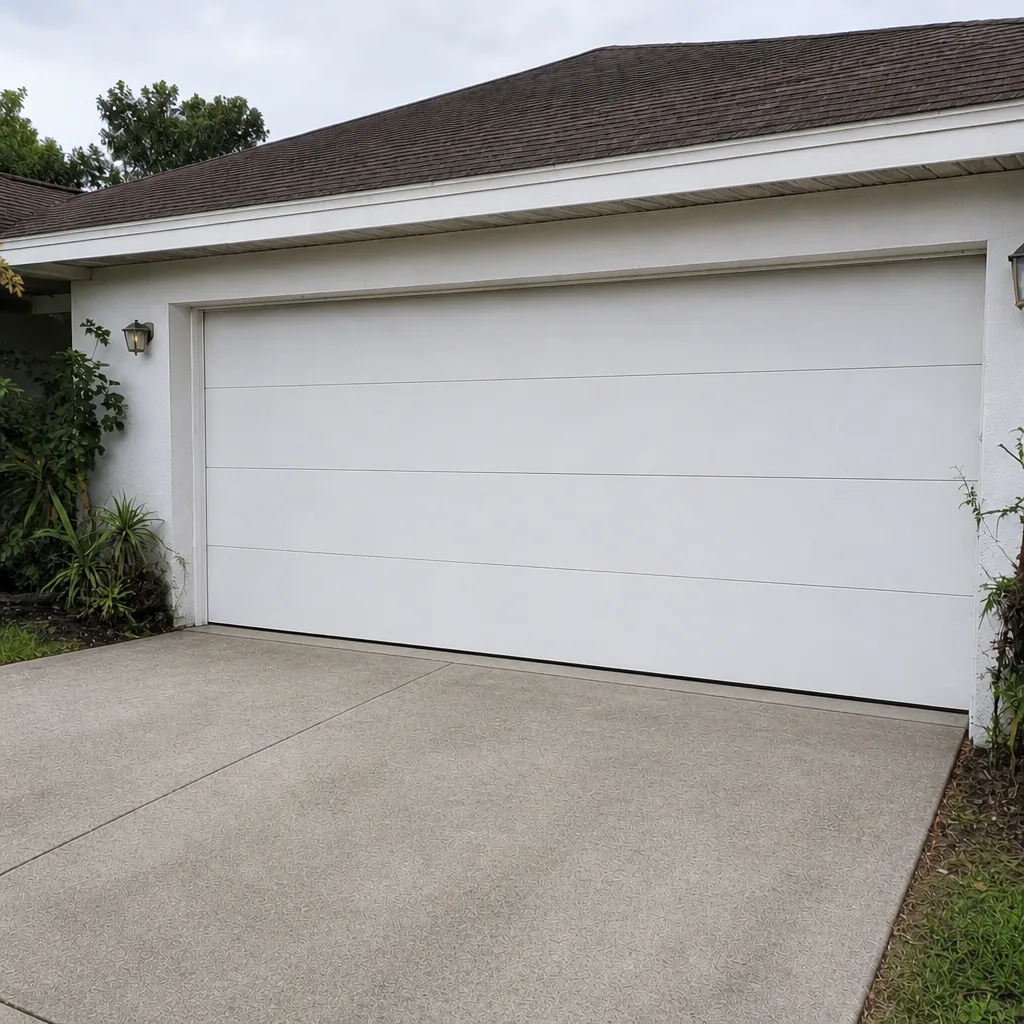 After
When to Call a Professional
Call a professional when the repair involves stored tension (any spring or cable), when the track is bent or the door binds, when the opener needs wiring or a control board, or when the door won’t open or close and your household depends on it. Call the same day if the door is stuck open and your garage is exposed, or stuck closed with the car trapped inside. That’s a security and access problem, not an inconvenience. If you’re not sure whether your task is on the safe list, describe it and ask rather than guessing. Garage Door Repair Titusville offers free estimates in Titusville – call (855) 337-1659. We answer 24/7. Fast dispatch from 7am to 7pm, Sunday through Friday. Same-day repair is often available for urgent failures.
Frequently Asked Questions
No. Torsion spring replacement requires controlling a load of hundreds of pounds of torque with specific tools in a specific sequence, and a mistake can cause serious injury. This is the clearest do-not-DIY task on any garage door. A dedicated garage door spring repair technician has the winding bars, the safety gear, and the experience to do it safely. Call (855) 337-1659 for a free estimate – the price is quoted and agreed before any work starts.
Pricing depends entirely on the job – a sensor adjustment is a small service call, and a spring replacement is a bigger one. We don’t publish a flat rate because it wouldn’t be honest. What we can promise is a free estimate and a written price before anything starts. Call (855) 337-1659 and describe the problem – the technician will give you a number, and you decide from there.
In most cases, yes. Florida codes place garage doors on the wind-load envelope, and the exact permit requirement depends on your jurisdiction and wind zone. Call the Titusville building department and ask about your address. A licensed and insured local installer handles the permitting and inspection process, which is one reason a professional install is usually worth the difference over a DIY one.
No. A door with a broken spring is far heavier than it should be, and forcing it up or down can damage the opener or the door itself, or cause the door to fall. Leave it closed, don’t pull the release cord, and call for repair. If the door is stuck open and exposed, that’s a security risk – call (855) 337-1659. We answer 24/7.
No, not the agreed price. The written estimate sets the price, and the technician confirms the diagnosis before any work starts. If a second problem turns up that wasn’t visible when the estimate was written, you hear about it first, with a price, before anything is touched. That’s the standard for every job, from a small garage door opener repair to a full installation.
Yes, and we encourage it. Clearing the garage floor, replacing the weatherstrip, wiping the sensors, and re-pairing a remote are all safe homeowner jobs. Doing them before a technician arrives shrinks the scope of the service call and sometimes the estimate. Just don’t loosen a spring or cable to “help” – that turns a repair into a hazard.
The Bottom Line
The DIY-versus-professional question for garage doors isn’t really about money. It’s about correctly sorting the tasks that are safe for you to do from the ones that aren’t. Lubrication, sensors, remotes, weatherstrip, and inspections: do those yourself and save the call. Springs, cables, tracks, and opener wiring: call a professional, get the free estimate, and know the price before the work starts. In Titusville, add one more step – ask the building department about the permit before any installation. Do that, and you’ll make the right call every time.
If you’re on the fence, describe the problem and get a free estimate. Call (855) 337-1659. We answer 24/7. Fast dispatch from 7am to 7pm, Sunday through Friday. Springs, openers, panels, full installs – one call covers it all, and we work on the brand you already have.
Written by the team at Garage Door Repair Titusville.