
Last updated November 22, 2026
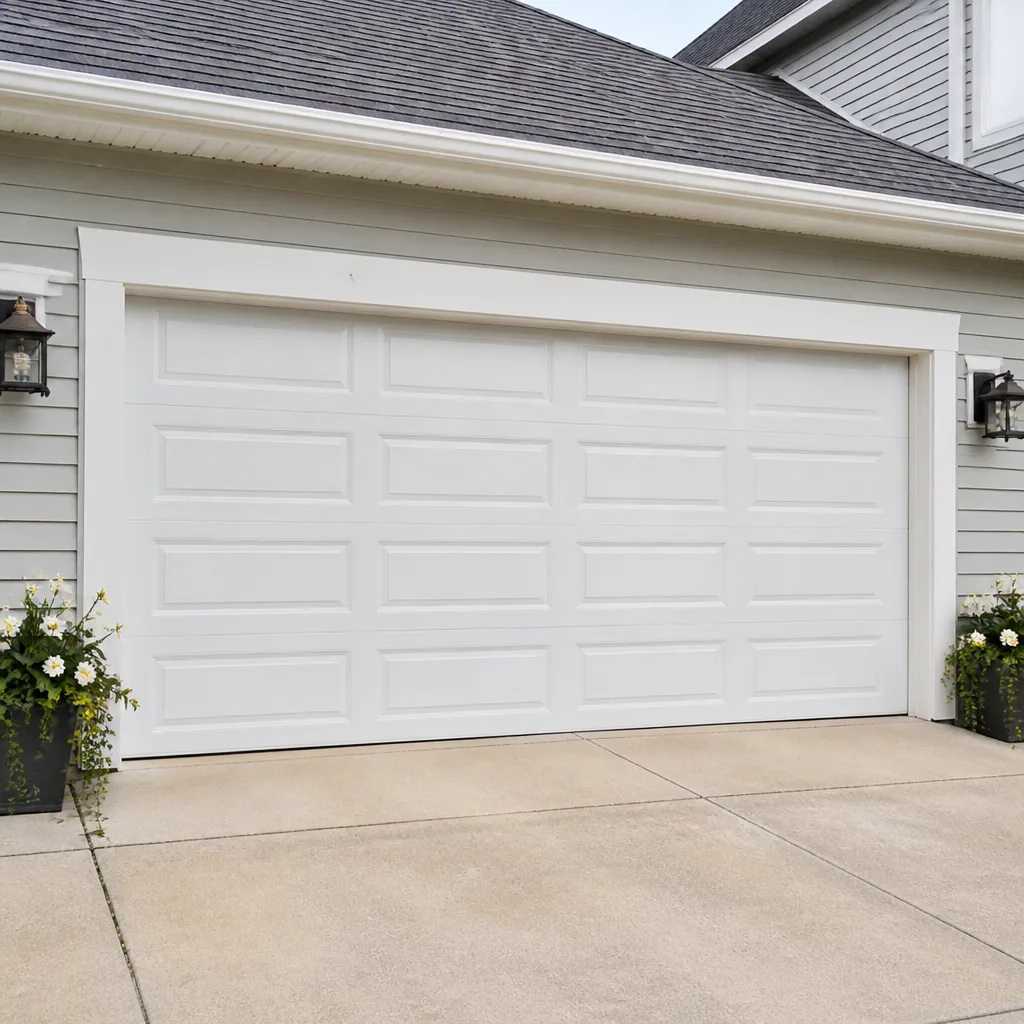 Raised-panel steel
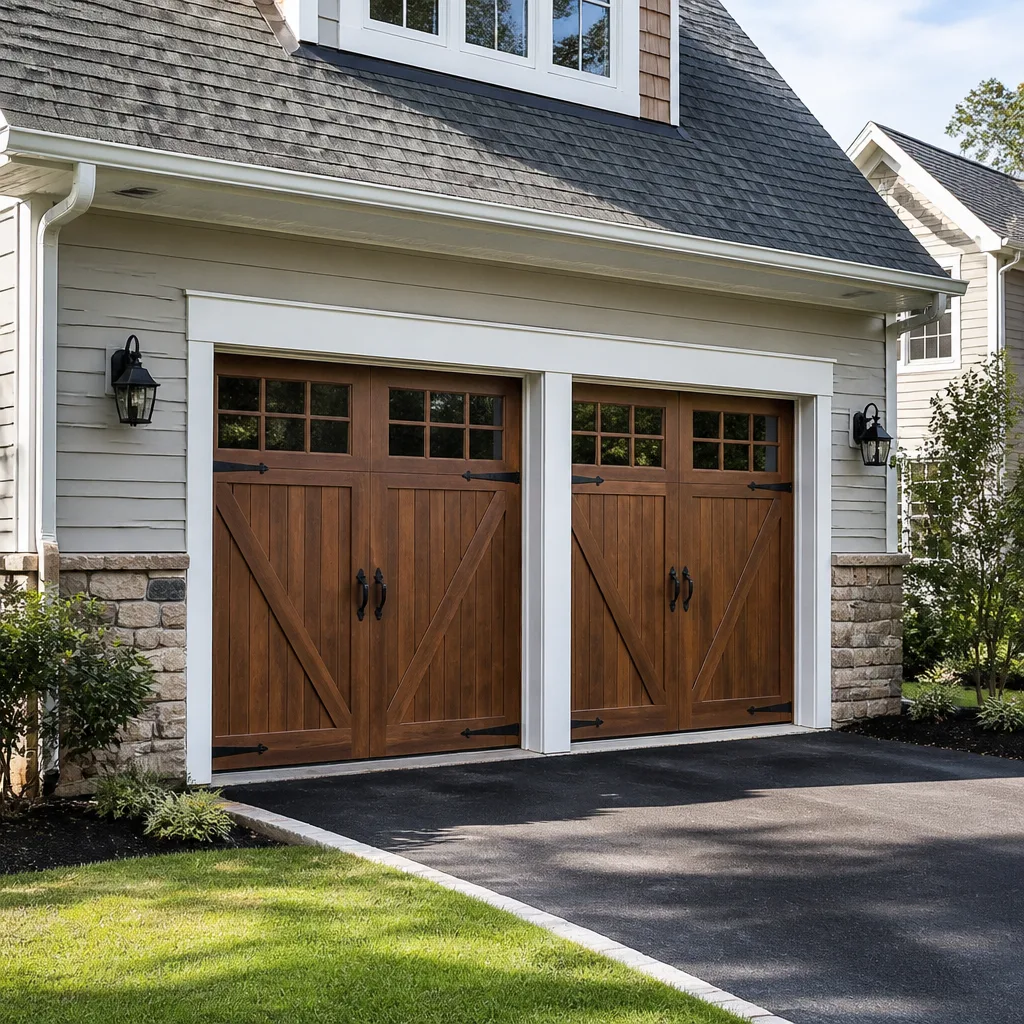 Carriage house
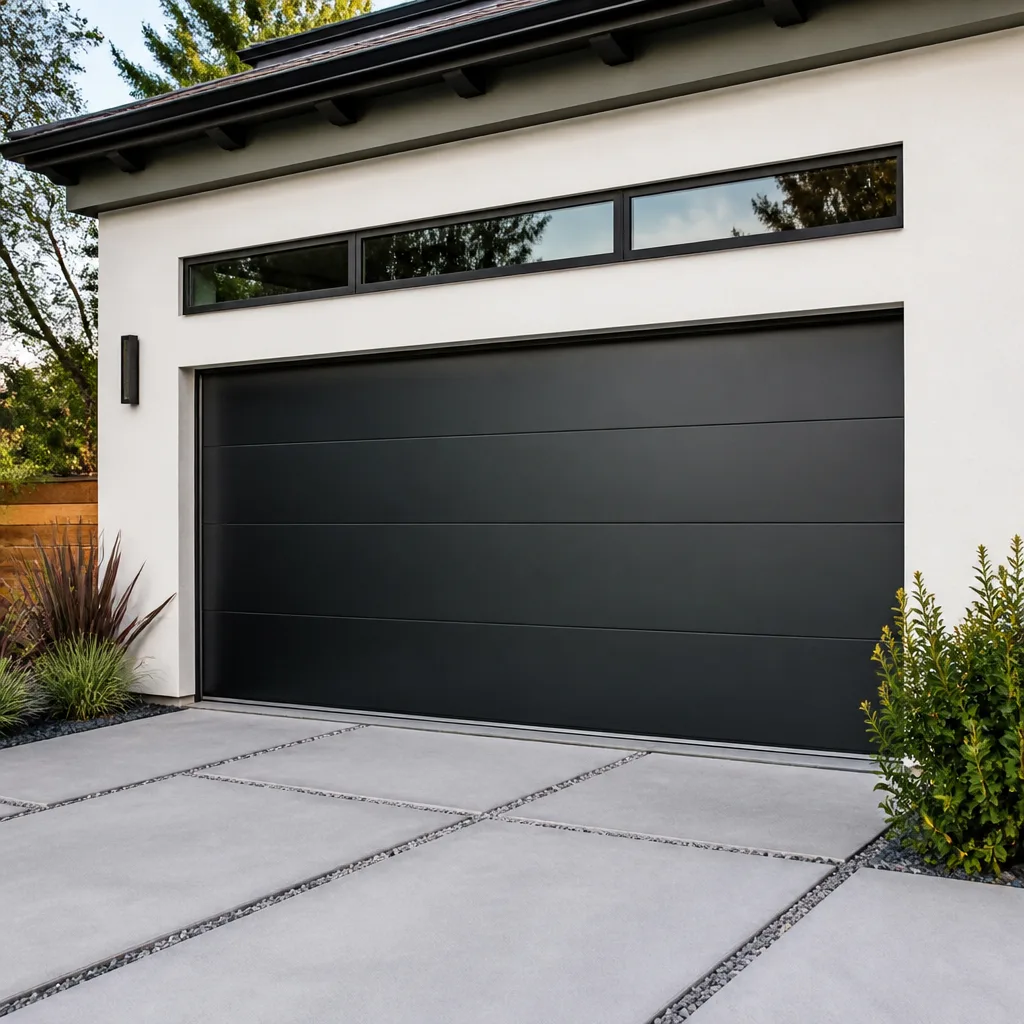 Modern flush
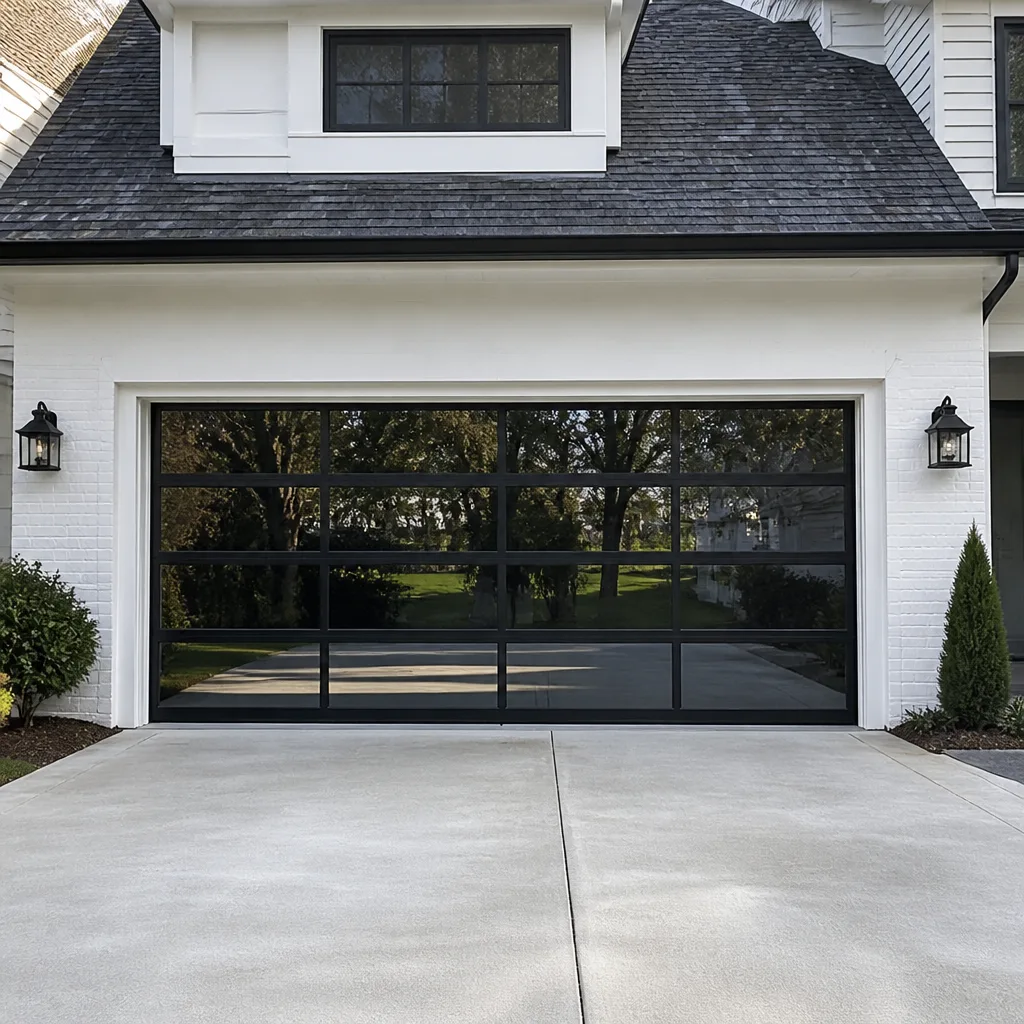 Full-view glass
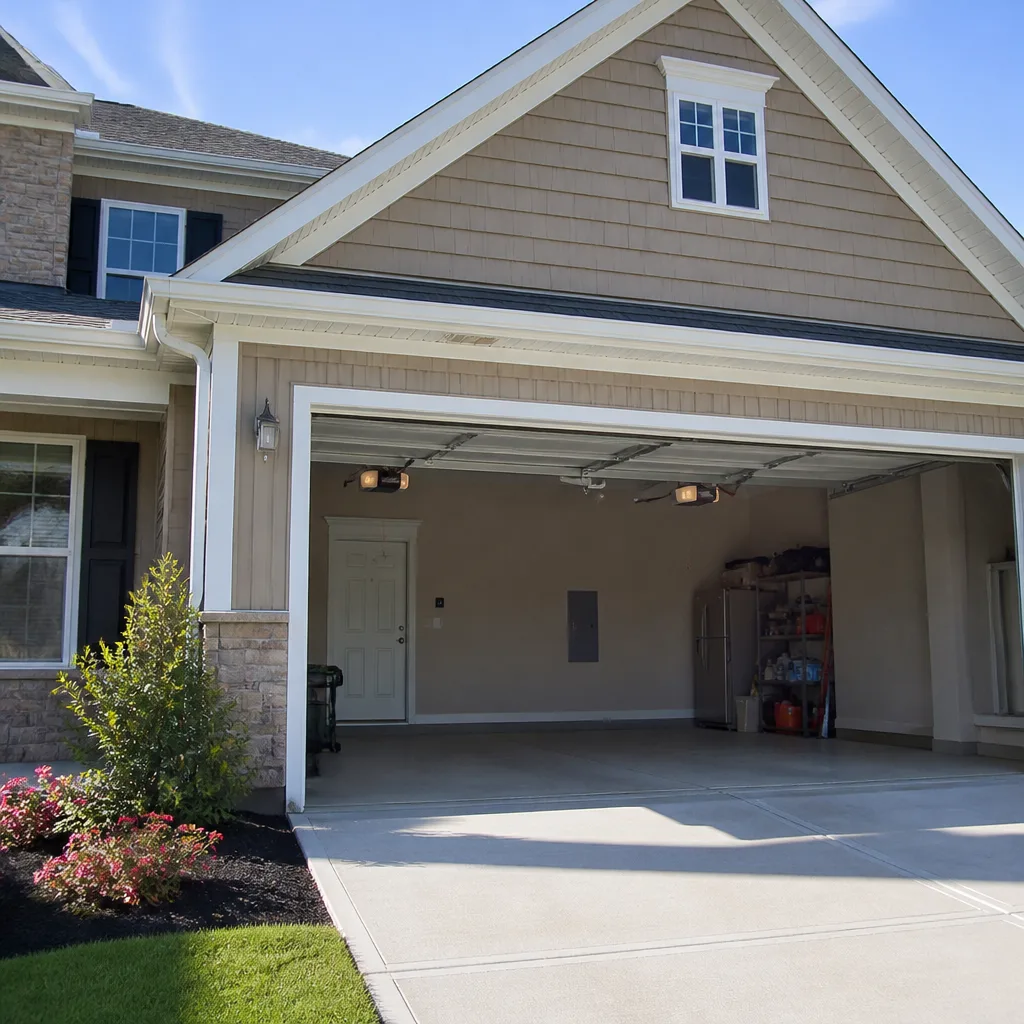 LiftMaster openers
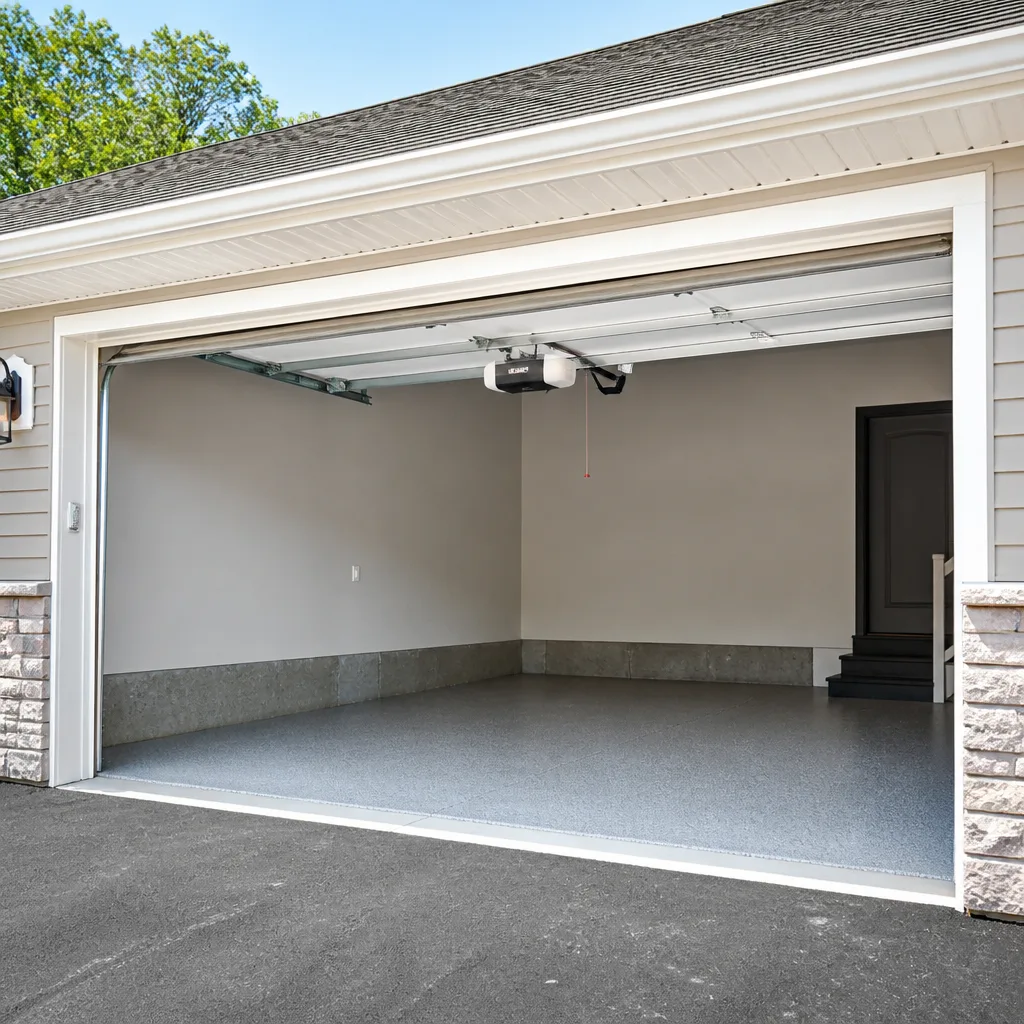 Chamberlain openers
Full 25-point door and opener safety check with every visit - springs, cables, rollers, tracks, and your LiftMaster or Chamberlain opener included
You get a price before we start. It does not change when the pro arrives.
Get your free estimateGarage Door Repair Maintenance Checklist for Titusville Homeowners
Nine out of ten garage door service calls involve a problem that showed clear warning signs weeks earlier. What surprises most Titusville homeowners is how fast those signs show up here. Humidity, UV, and storm-season wind all compress the normal failure timeline for springs, cables, rollers, and weatherstripping, so hardware that would last years in a dry climate can start corroding in months. This guide is a working maintenance checklist built around what actually breaks in Titusville, not what breaks somewhere else. You’ll learn what to inspect each month, how to spot early corrosion before it becomes a snapped spring or cable, which lubricants hold up in Florida heat, and what to reset after a named storm.
Quick Answer
A garage door maintenance checklist for Titusville should cover monthly visual inspections of springs, cables, rollers, and weatherstripping; lubrication every two to three months with a product that won’t break down in heat; a monthly auto-reverse safety test; and a full reset inspection after any named storm or significant wind event. Humidity, UV exposure, and wind-driven rain are the three forces that shorten hardware life in Titusville, so the schedule here is tighter than a generic national checklist. Catching rust, cracking seals, and loose hardware early is what keeps a small fix from turning into an emergency call.
Styles & brands we work with
- Raised-panel steel
- Carriage house
- Modern flush
- Full-view glass
- LiftMaster openers
- Chamberlain openers
Table of Contents
- Why a Titusville Maintenance Checklist Looks Different
- The Monthly Inspection Walk-Through
- Catching Early Corrosion Before It Costs You a Spring
- Lubrication in Florida Heat: What Breaks Down and What to Use
- Testing Auto-Reverse and Safety Sensors
- Panel and Track Inspection for Storm and Impact Damage
- The Post-Storm Checklist
- A Year-Round Schedule at a Glance
Why a Titusville Maintenance Checklist Looks Different
Most garage door maintenance advice you find online was written for a national audience. It assumes a moderate climate, low humidity, and a fairly stable exterior environment. Titusville doesn’t hand you any of those. The Space Coast gets heavy summer humidity, intense year-round sun, and a hurricane season that puts real wind load on a door and its tracks several months a year. Each of those forces attacks a different part of the system, and together they shorten the gap between “works fine” and “needs repair.”
Humidity is the quiet one. It works on bare steel and on the zinc plating of torsion springs, on cable strands, on hinges, and on roller stems. You won’t hear it happening. The first sign is often a light orange film on a spring coil or a hinge plate. Left alone, that film becomes pitting, pitting becomes a stress point, and a stress point becomes a spring that lets go under load. That’s why a dedicated spring repair exists as its own service. Torsion and extension springs store enormous energy, and a corroded one does not fail gently.
UV is the second force. It attacks weatherstripping, the bottom seal, the side jambs, and the plastic components of older openers. Sun-baked rubber cracks, hardens, and stops sealing, which lets wind-driven rain reach the door’s interior face and the hardware behind it. The third force is wind. Titusville’s storm season flexes the door, loads the hinges, and works track bolts loose over time. A door that’s slightly out of line may run quietly on a calm day and bind badly on a windy one.
The takeaway is simple: the standard maintenance cadence that works in a mild climate is too slow for Titusville. This checklist tightens it and adds items for humidity, heat, UV, and storms that a generic list skips. If you’d rather not run the inspections yourself, our Garage Door Repair Titusville team handles them as part of any repair visit. Our technicians have up to 12 years of experience reading exactly these failure patterns.
The Monthly Inspection Walk-Through
A monthly walk-through takes most homeowners about ten minutes and catches the vast majority of early-stage problems. Do it from the ground with the door closed first, then run the door and watch it. Keep your hands clear of hinges, springs, and cables at all times. Those parts move under load even when the door looks still.
- Look at the springs. With the door closed, check both torsion springs above the door (or the extension springs along the sides on older doors). Look for rust film, gaps, or a spring that looks stretched or unwound compared to its neighbor. Never touch them; a visual check is all a homeowner should do.
- Check the cables. Look at the cables running from the bottom corners up the sides. Fraying, kinks, or a cable that’s come off its drum are all signs of trouble. If a cable is slack or off the drum, stop and call a technician before running the door again.
- Inspect rollers and hinges. Look for wobble, flat spots on the rollers, and rust on the hinge plates. A roller that squeals or grinds is telling you it’s dry or worn.
- Check the weatherstrip and bottom seal. Run a hand along the bottom seal (door closed) and the side jambs. Cracking, gaps, or rubber that feels hard and brittle are all UV damage.
- Look at the tracks. With the door closed, look down the length of each track for dents, debris, or misalignment. A small dent anywhere along the track will cause binding.
- Test the balance. Disconnect the opener (pull the release handle), lift the door to about waist height, and let go. A well-balanced door stays roughly where you put it. One that slams down or drifts up is out of balance and needs a technician.
- Run the door and listen. Reconnect the opener and run the door through a full cycle. Listen for grinding, popping, or uneven movement. Note anything new.
None of these steps requires tools or a ladder. They’re all about what you can see and hear from the ground. What you do with what you find is covered in the sections below. If you find something that needs fixing, our garage door repair team can come out and look at it.
Catching Early Corrosion Before It Costs You a Spring
Corrosion is the leading cause of premature spring failure in Titusville, and it’s the easiest thing on this checklist to catch early. The trick is knowing where to look and what early corrosion actually looks like. It doesn’t announce itself with red flakes. It starts as a dulling of the metal’s finish, then a faint orange or bronze film, then pitting you can feel with a fingernail.
Here’s where to focus your eyes each month:
- Torsion spring coils (above the door). Check the entire length of each coil. Springs are plated, but the plating wears thin on the outer facing surface. Rust on the coil wire is a red flag, because the spring is under constant tension and any corrosion creates a stress riser.
- Extension springs (sides of older doors). Extension springs often have a visible oil or black coating; check the exposed ends and the hooks for rust.
- Cable strands. Look at the cable itself, not just the ends. Rust-stained strands or a cable that looks dull and pitted means the cable is weakening.
- Hinge plates and roller stems. These are lower-value parts but they’re your early warning. Surface rust on hinges typically means the same conditions are working on the springs above.
- Track bolts and angle iron. Rusted track fasteners loosen as the metal expands and contracts with heat, which can throw the door out of alignment.
What do you do with what you find? Surface film on a hinge or a track bolt is a good clue that the whole assembly needs lubrication and a closer look. Rust on a spring coil or cable strands is a stop-and-call situation. A corroded spring can fail even when the door seems to run fine, and the failure happens suddenly with no warning at the door itself. That’s why we treat garage door spring repair as a safety service, not a routine tweak.
If the film is on hardware, wax or a corrosion-inhibiting spray on the hinges and track bolts helps slow it. If it’s on the spring or the cable, call a technician. A technician can read the corrosion pattern on site and tell you whether the spring is close to failing or has life left in it. That’s a five-minute judgment call for someone who looks at these every day.
Lubrication in Florida Heat: What Breaks Down and What to Use
Not all garage door lubricant survives a Titusville summer. High heat and humidity do two things to common products: they thin light oils so they run off before they’ve done their job, and they can turn some greases gummy, which attracts grit and turns a smooth roller into a grinding one. If your door squeals more in July than in January, the lubricant is probably the reason.
Here’s how to think about the products:
- Avoid light spray oils. They work for short-term quieting but evaporate or run off quickly in heat. You’ll end up lubricating again every few weeks.
- Avoid general-purpose grease on tracks. Grease on the tracks attracts dust and debris and gums up. Tracks should be dry and clean and lubricated only as the roller stems require.
- Use a garage-door-specific lubricant or a lithium or silicone-based product on hinges, roller stems, and the spring coils (a very light spray on the coils is fine; do not soak a spring). These hold up better to heat and humidity.
- Wipe before you spray. Wipe down dirt and dust first with a dry rag, then apply a light coat. Spraying onto dirt just traps it.
The right cadence in Titusville is every two to three months during the warmer months, and about every four months in the cooler season. Do it on a mild morning rather than the middle of the day, because heat-thinned lubricant applied to hot metal behaves differently. Keep the track surfaces dry; lubricate the rollers and hinges, not the track itself. If the door is a modern opener with a belt or chain drive, hit the opener’s chain (if it has one) with a garage-door-specific spray once a year, and leave the belt alone unless a technician tells you otherwise.
Lubrication is one of the cheapest maintenance tasks you can do, and it’s the one most often skipped. A well-lubricated door in Titusville runs quieter, runs smoother, and puts less stress on the opener and springs. If the opener starts laboring or grinding even after a fresh lubrication, the opener itself may be the problem. Our garage door opener repair team works on LiftMaster, Chamberlain, Genie, and Craftsman units, so if your opener needs a look, you don’t have to hunt for someone familiar with the brand.
Testing Auto-Reverse and Safety Sensors
Auto-reverse is the single most important safety feature on a garage door, and heat is one of the things that can make it unreliable. The mechanism works two ways: an object blocking the door on the way down triggers the door to reverse, and the safety sensors at the bottom corners detect an obstruction and stop the door. Test both about once a month, and definitely after any heat wave or storm.
- Test the object-reversal. Open the door fully, then close it with the wall control. As it comes down, wave a sturdy object (a rolled-up towel or a piece of lumber; never your hand or a child’s toy) into the path of the door near the bottom. The door should reverse immediately and return to open. If it presses down on the object before reversing, or doesn’t reverse at all, stop using the door and call a technician.
- Test the safety sensors. Look at the two small sensor units at the bottom corners of the tracks. Most have an LED indicator: one lit steadily and one blinking means the sensors are not aligned. Block the beam between them with a hand or a box, and the door should refuse to close when you press the control.
- Check the sensors for heat damage and debris. In Titusville, dust, pollen, and insect nests can build up on the sensor lens. Wipe the lens with a dry cloth and check the alignment.
- Check that the sensors are secure. The sensor brackets are small and can loosen. A sensor that’s fallen out of alignment is one of the most common reasons a door won’t close.
If the door fails any of these tests, treat it as a stop-use situation. That’s a same-day call we treat seriously. We answer 24/7, and outside dispatch hours the call is booked into the next opening, Sunday through Friday, 7am to 7pm. Safety-sensor and reverse issues are one of the top same-day failures we see in Titusville, and they’re usually a quick fix once a technician is on site.
Panel and Track Inspection for Storm and Impact Damage
Panel and track damage is the most deceptive category on this list. A bent track or a slightly bowed panel can look fine when the door is closed, or even when it’s open, and still cause the door to misalign under load. The damage often shows up as binding on one side, a door that drifts when you disconnect the opener, or a grinding noise that comes and goes. Wind events, storm debris, and in some cases a vehicle bumping the door are all common causes in Titusville.
Here’s how to inspect panels and tracks:
- Look at each panel from a few feet back. Stand back and look for a panel that’s bowed, dented, or visibly out of line with its neighbors. Panels that are pushed back are usually the ones that cause alignment problems first.
- Check for impact marks. Small dents from flying debris or a stray branch are easy to miss but can start a stress crack.
- Run your hand along the tracks. Gently, with the door closed. Look and feel for dents, kinks, or bends. A track that has been knocked out of shape will bind the rollers.
- Check the angle iron and track mounting. Loose bolts, popped fasteners, and rust on the mounting hardware are all signs the door took a hit or is flexing under wind load.
- Look for panels that have shifted in their hinges. A panel that’s sat lower than its neighbor means a hinge is loose or a panel has moved on its hinges.
Panel damage isn’t always a replacement call. A slightly bent track can usually be straightened, and a hinge or fastener can often be reset. A cracked or badly bent panel is usually a replacement, and on a common residential door that often comes down to matching the profile. That’s where brand familiarity saves a lot of shopping. A Wayne Dalton or Amarr door has a specific panel profile and hardware setup, and a technician who knows the model can tell you quickly whether you need a panel, a set of hinges, or a full door.
The thing to remember is that “it still opens” doesn’t mean it’s fine. Panel and track damage that isn’t corrected puts extra load on the springs, rollers, and opener, and it shortens the life of every part above it.
The Post-Storm Checklist
Titusville’s storm season means the regular monthly routine isn’t always enough. After any named storm or significant wind event, reset the checklist whether or not anything looks obviously wrong. High wind can flex the door, work fasteners loose, and move a panel or two out of alignment in ways that aren’t visible until the door is under load again.
Run these items in order after a storm event:
- Walk the door from the outside. Look for debris in the tracks, panels that have shifted, and anything that’s been pushed against the door.
- Check the balance. Disconnect the opener and lift the door halfway. A door that won’t stay put after a wind event has almost certainly been pushed out of balance.
- Inspect the springs and cables again. Look for new rust streaks, frayed strands, or a spring that looks different from its neighbor.
- Test the auto-reverse and safety sensors. Wind and water can knock sensors out of alignment or move the door’s travel limits.
- Clear the tracks. Remove any debris, leaves, or grit that worked its way in, and check that the track mounting bolts are still tight.
- Check the weatherstripping. A torn or displaced bottom seal after a wind event lets water into the interior face.
- Run a full cycle and listen. Any new grinding, popping, or uneven movement is worth a technician’s look before it becomes a stuck door.
If the door won’t move at all after a storm, or a spring has failed, treat it as an emergency. A stuck-open door on a Titusville home is a security and weather problem, and a stuck-closed door can keep you from getting out. We’re set up for those calls. Our emergency garage door service is a core offering, not an add-on, so a call to (855) 337-1659 gets a technician headed your way rather than a “we’ll get back to you.”
A Year-Round Schedule at a Glance
Here’s the whole checklist boiled down to a schedule you can actually keep. Adapt the timing to what you find; some doors need more attention than others, especially older doors with extension springs or doors with aging hardware.
- Every month: the seven-point walk-through (springs, cables, rollers, weatherstripping, tracks, balance test, run-and-listen).
- Every two to three months in warm weather: full lubrication of hinges, roller stems, and light spring coil spray.
- Every month (and after any heat wave): auto-reverse and safety sensor test.
- Every four months in cooler weather: lubrication.
- Annually: closer inspection of panel alignment, track condition, and opener chain (a garage-door-specific spray once a year). A good time to have a technician look at the door as a whole.
- After any named storm or significant wind event: the seven-item post-storm checklist above, regardless of where you are in the regular schedule.
The one item that isn’t on this list is the one most often left out: a look at the opener itself. Most modern openers in Titusville homes are LiftMaster, Chamberlain, Genie, or Craftsman units, and the opener is usually the last thing to fail. It’s also the thing that hides the problem longest, because a straining opener can sound fine right up to the point it overheats or the gear wears out. If the opener is older or you notice the door laboring, that’s a good time to look at a full reassessment rather than just a lube and a tune.
Common Mistakes to Avoid
- Lubricating the tracks. A little oil on the tracks feels good for a week, then it attracts grit and grinds up the rollers faster than dry tracks would. Keep the running surfaces clean and dry.
- Assuming no rust means no problem. Springs can be corroded inside the coil or under a light film. A quick visual check of both springs is worth more than a general “looks fine.”
- Skipping the balance test. A door that won’t stay put when you disconnect the opener is out of balance, and running it that way overworks the opener and the springs.
- Waiting after a wind event. “It still opened” isn’t the same as “it came through fine.” A quick post-storm walk-through catches minor damage before it becomes a stuck door.
- Using household oil or WD-40 as a substitute for garage-door lubricant. They evaporate or run off in the heat and can leave a gummy residue on hinges.
- Ignoring a sensor that keeps needing adjustment. A sensor that drifts out of alignment more than once is usually a sign the bracket is loose or the sensor itself is failing.
- Handling torsion springs yourself. Torsion springs are under extreme tension even when the door is down, and a homeowner has no safe way to release or replace one. Touching a spring is the one mistake on this list that can genuinely injure you.
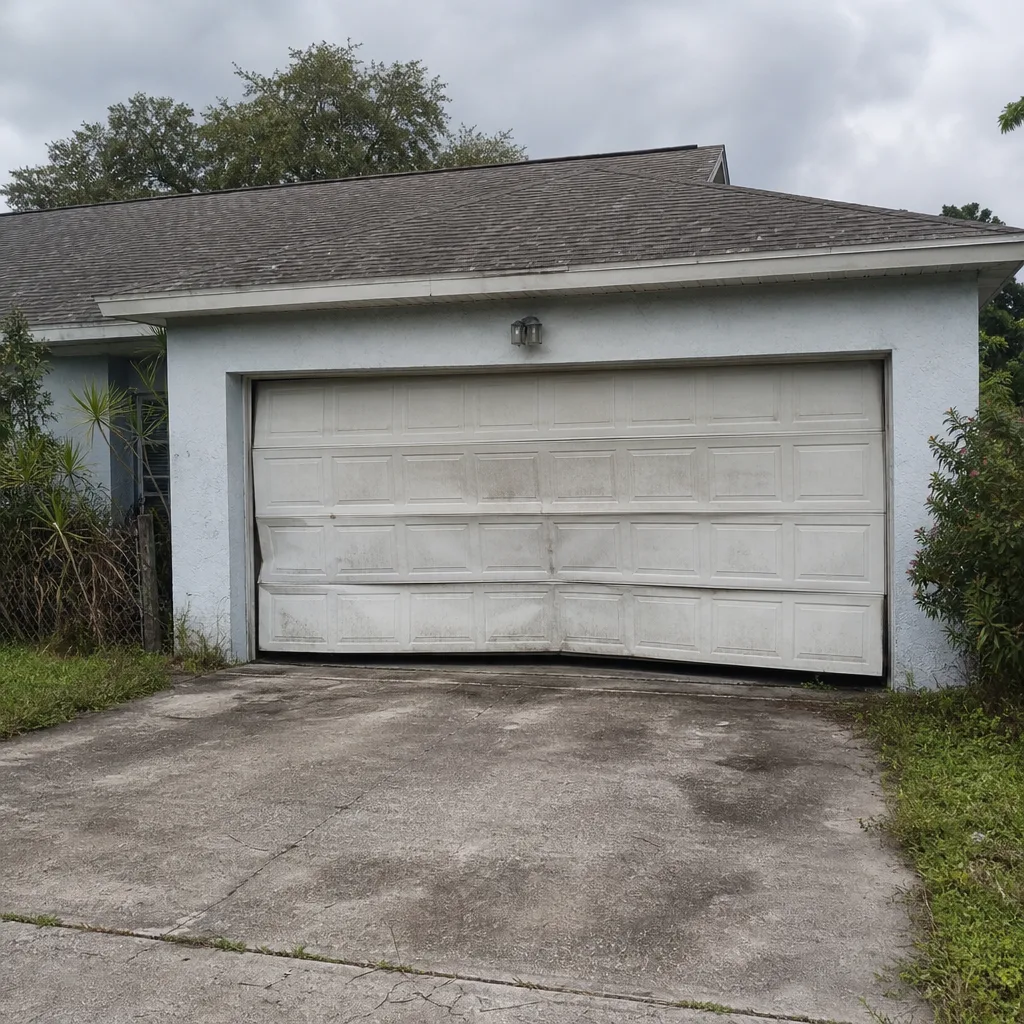
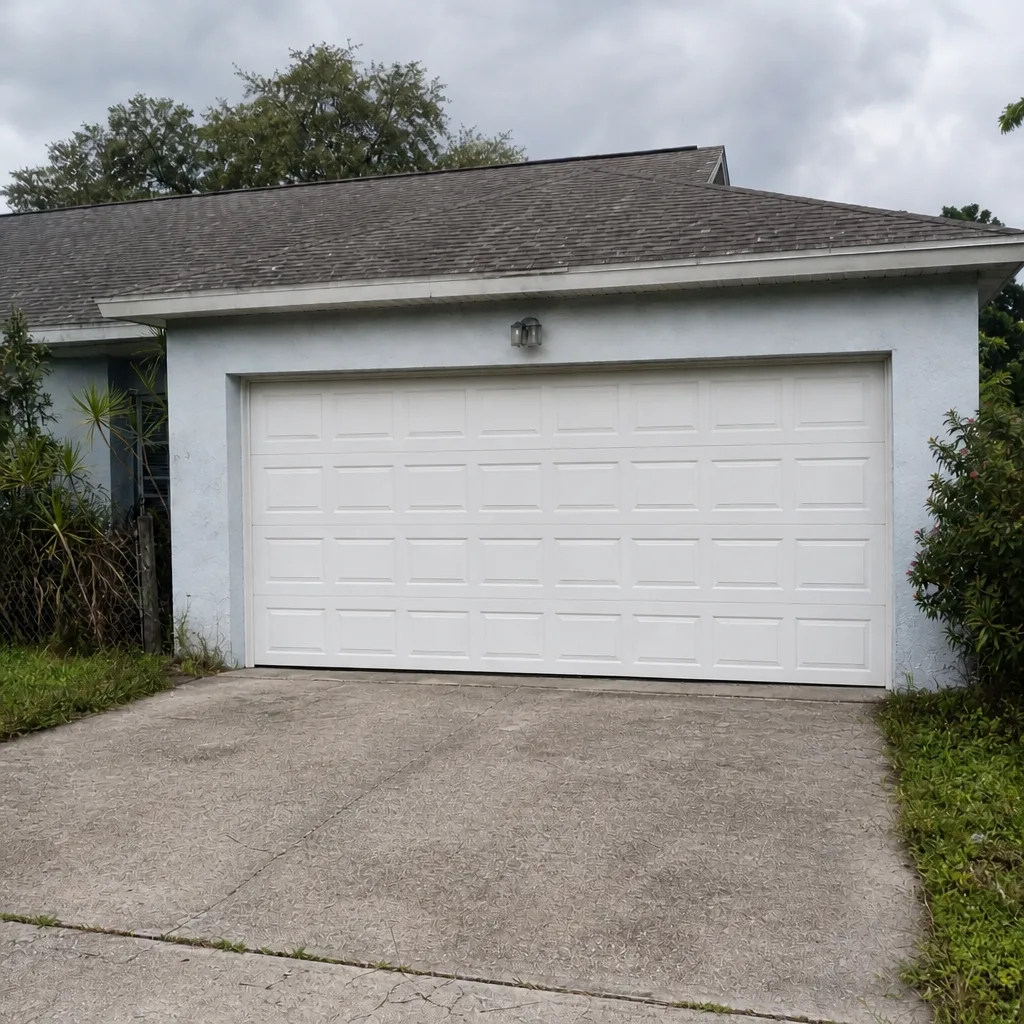
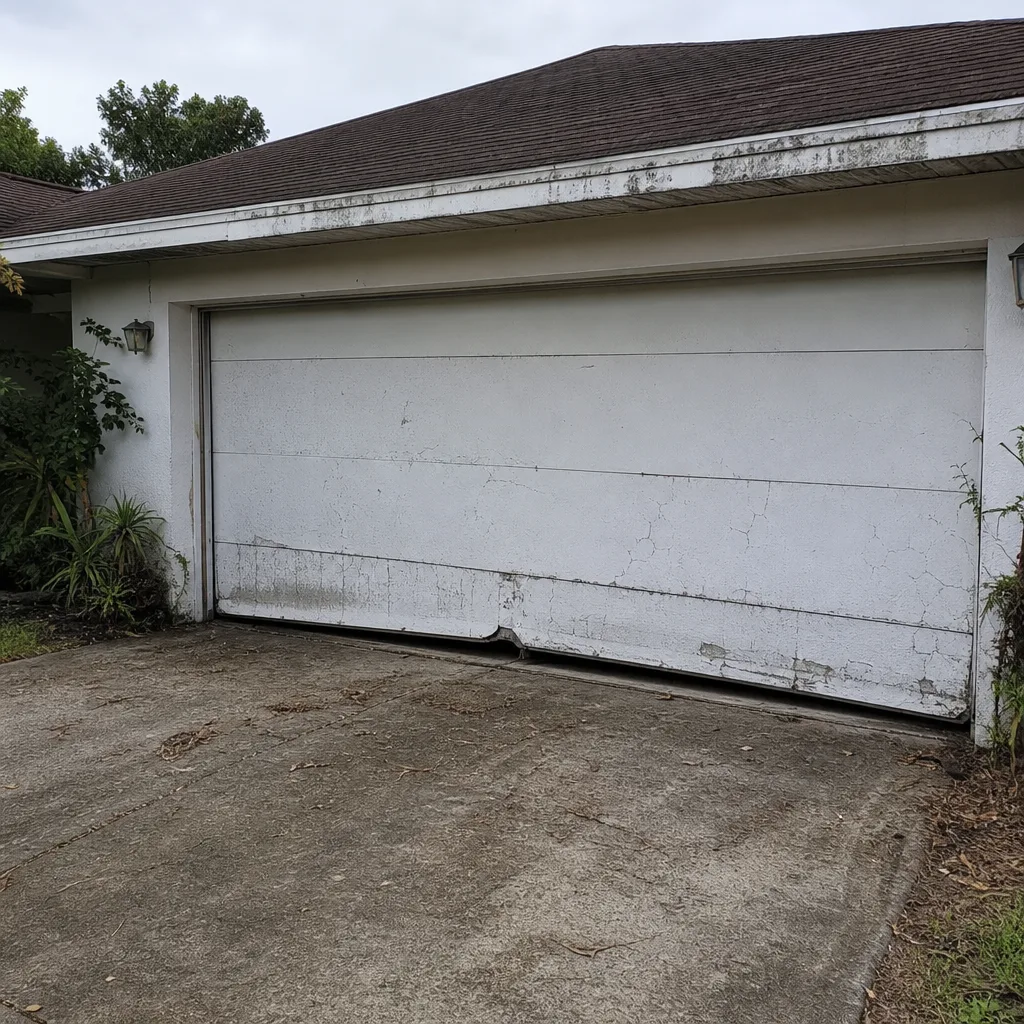
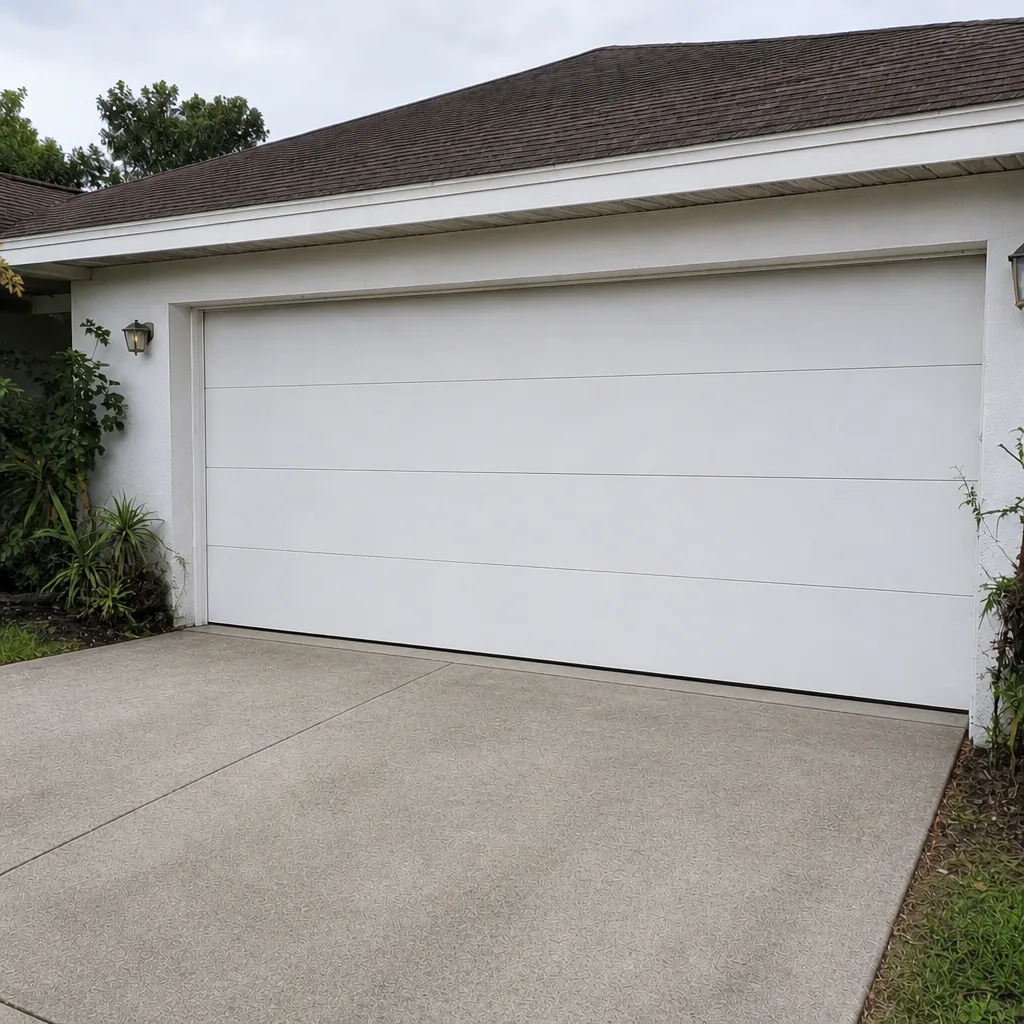
See the difference
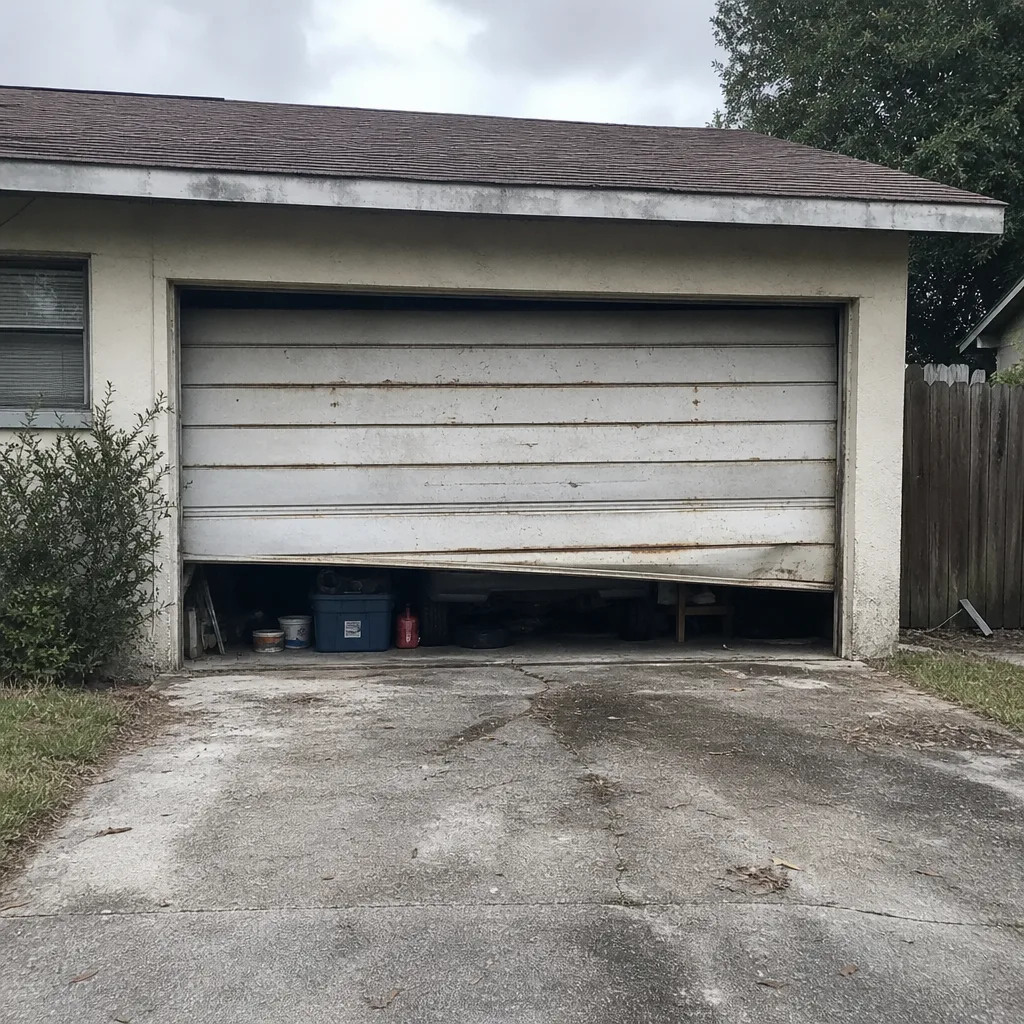 Before
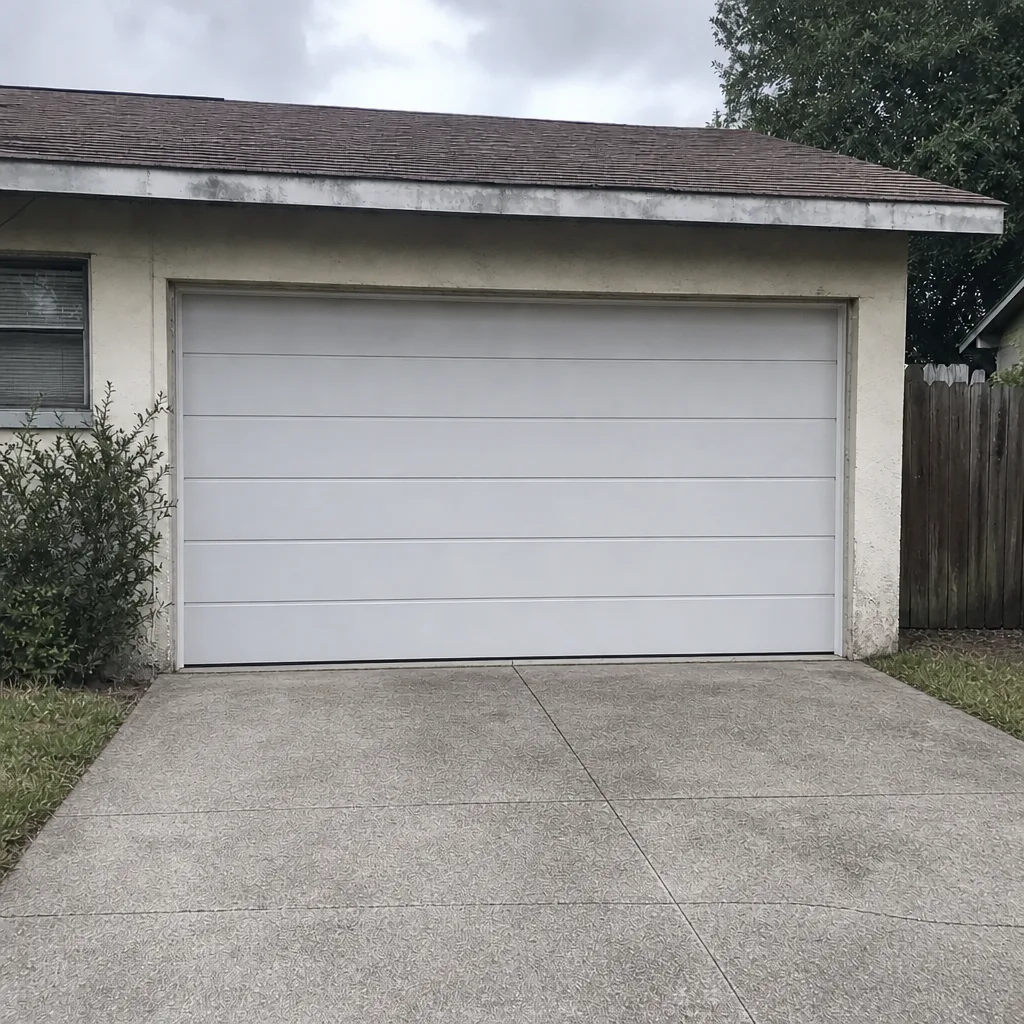 After
 Before
 After
 Before
 After
When to Call a Professional
Some items on this checklist are homeowner tasks and some are technician work, and the line between them matters. Call a professional when a spring is corroded, sagging, or visibly different from its neighbor; when a cable is frayed, slack, or off its drum; when the door won’t stay put when disconnected from the opener; when a panel is cracked or badly bent; or when the auto-reverse test fails. Also call if a panel or track has been knocked out of alignment, if a storm has moved or broken anything on the door, or if a newer door with smart-home hardware (LiftMaster, Chamberlain, Genie, or Craftsman) won’t connect or respond. A technician can look at any of these and give you a clear answer on whether it’s a repair or a replacement.
Our team in Titusville offers free estimates. Call (855) 337-1659. We answer 24/7, and fast dispatch is available from 7am to 7pm, Sunday through Friday. The estimate is free, the price is quoted and agreed before any work starts, and the written estimate is what sets the price. If it’s a spring or a cable, we won’t try to sell you a full door unless the door truly needs one.
Frequently Asked Questions
Lubricate hinges, roller stems, and spring coils every two to three months during the warmer months, and about every four months in the cooler season. Heat thins light oils and can turn some greases gummy in Titusville’s humidity, so the standard “once or twice a year” advice is too slow here. If the door squeals more in summer than winter, the lubricant is usually the reason. Call (855) 337-1659 for an exact quote – estimates are free.
No. Torsion springs are under extreme tension even when the door is down, and a homeowner has no safe way to release or replace one. Attempting it is the one item on this checklist that can cause serious injury, so it’s a call-a-technician job. Our spring repair team handles torsion and extension spring work every day. Call (855) 337-1659 for a free estimate.
Heat expands metal and softens rubber, so tracks, rollers, and weatherstripping all move slightly in summer. A door with a small alignment issue or worn rollers will often run fine in cooler weather and bind in heat. If the door binds only in the afternoon, that’s a good sign it’s a heat-related alignment or lubrication issue. Call (855) 337-1659 and we’ll take a look.
Walk the door from the outside and look for debris in the tracks, shifted panels, and anything pushed against the door, then run the balance test with the opener disconnected. If anything looks off, don’t run the door again until a technician looks at it. A stuck-open door is a security and weather problem, and our emergency service is a core offering. Call (855) 337-1659.
Cost depends on the part and the problem, but here’s the shape of it: a minor repair (rollers, hinges, adjustment) is typically the lowest-cost job, spring repair is typically the mid-range job, and a full door replacement or a major panel replacement is typically the highest. The written estimate sets the final price, and the price is quoted and agreed before any work starts. Call (855) 337-1659 for a free estimate.
No. We service products from LiftMaster, Chamberlain, Genie, Clopay, Amarr, Wayne Dalton, Craftsman, and Raynor, so whether your hardware is a common residential model or an older legacy unit, we’re familiar with it. Brand familiarity saves time on a service call because the technician already knows the model’s hardware and panel profile. Call (855) 337-1659 for a free estimate.
The Bottom Line
The right maintenance checklist for a Titusville home is built around what this climate actually does to a garage door, not a national average. Check the springs and cables for early corrosion each month, lube for heat and humidity rather than the calendar, test the auto-reverse and safety sensors regularly, inspect panels and tracks after any storm, and keep hands off the torsion springs themselves. Do that and you’ll catch the small stuff long before it turns into a stuck door or an emergency call. If you spot something that needs a technician, our team at Garage Door Repair Titusville is ready to help.
Written by the team at Garage Door Repair Titusville.